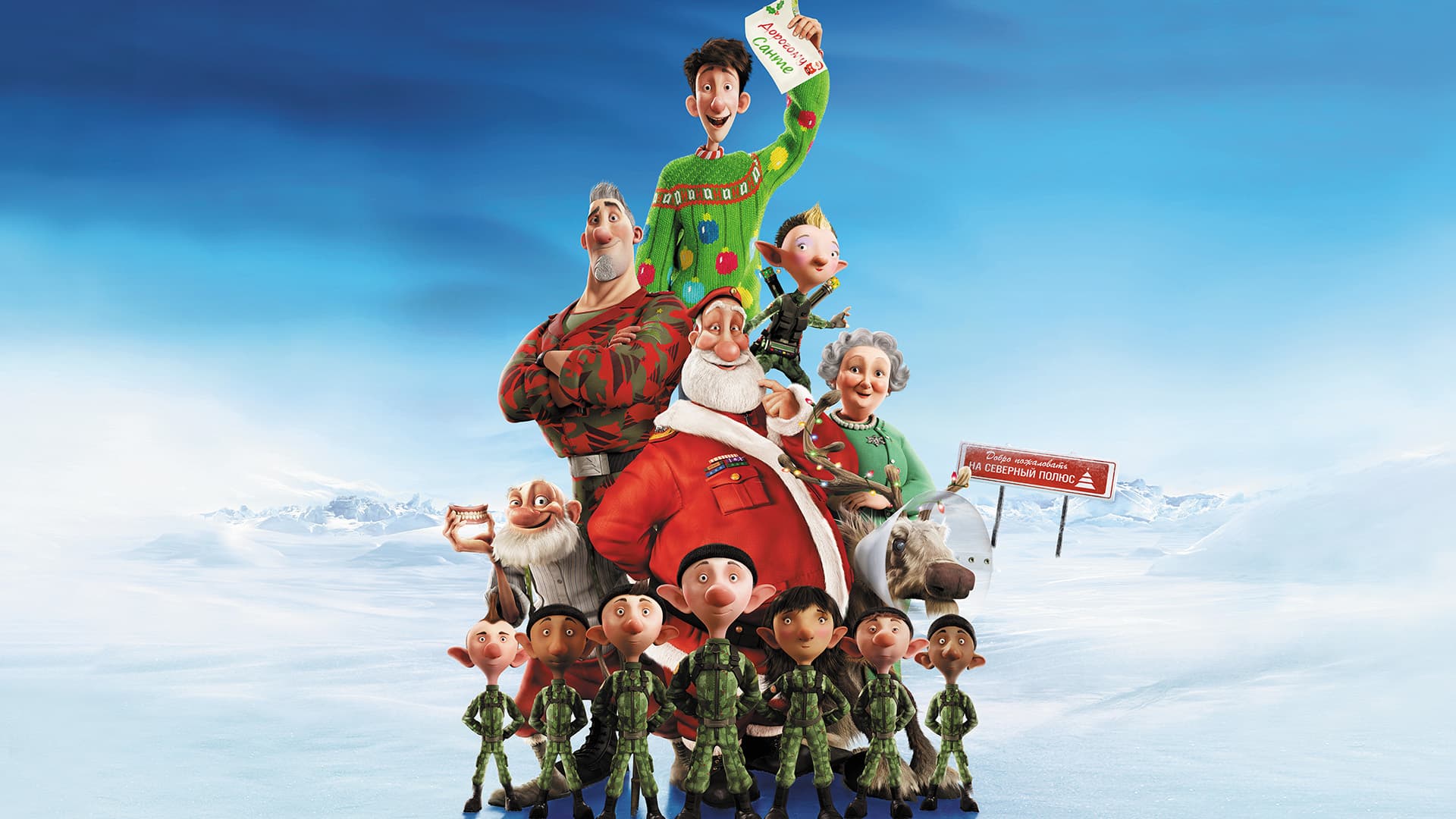

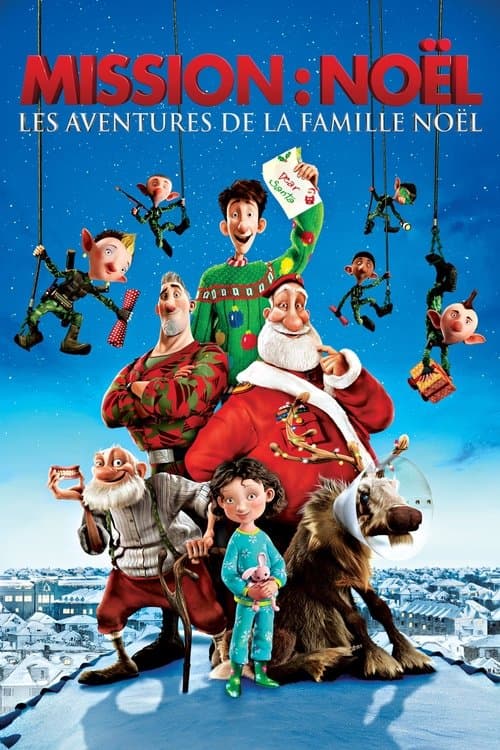
Arthur Christmas
Does this age rating seem accurate to you?
Detailed parental analysis
Mission: Christmas is a family animated comedy with an upbeat and slightly offbeat tone, driven by a benevolent energy. The plot follows Arthur, the youngest son of Father Christmas, who embarks on a last-chance mission to deliver a forgotten gift to a little girl before dawn on 25 December. The film primarily targets children from 5-6 years old and their parents, with enough second-degree humour to hold adults' attention.
Underlying Values
The film builds its central argument around a simple and well-executed idea: every child matters, even when numbers and systems say otherwise. Arthur embodies selfless kindness in a family environment dominated by logistics, performance and competition for power. The narrative explicitly contrasts two worldviews: that of Steve, obsessed with efficiency and statistics, and that of Arthur, driven by empathy. The resolution vindicates Arthur without crushing the other characters, which avoids easy manichaeism. This is a rich angle for discussion with a child: can everything always be reduced to numbers, and what do we lose when we do?
Parental and Family Portrayals
Family dynamics lie at the heart of the film and deserve attention. The current Father Christmas is an affable but overwhelmed character, largely unaware of his own children. Steve, the competent and ambitious eldest son, is presented as cold and self-seeking before he evolves. Grandsanta is a nostalgic old man, self-centred and sometimes irresponsible, whose anecdotes reveal frankly questionable practices: he mentions having knocked children unconscious with a sandbag, threatened elves with being given to polar bears, and given whisky to an elf to make him forget an incident. These details are treated in the mode of absurd humour, but they may surprise parents and deserve to be anticipated. The final reconciliation between the three male generations is sincere and well constructed. Mrs Claus, by contrast, is the most competent figure in the family and the most systematically overlooked, which is a genuine angle for discussion.
Discrimination
The film accumulates several stereotyped shortcuts in its settings and secondary characters: the scene in Tanzania is reduced to a plain populated by threatening lions, Mexico is represented by wrestlers, a sombrero and a chihuahua, and the Scottish elf wears a kilt. These geographical and cultural caricatures are light but repeated, and can easily imprint themselves on a young child. More notably, the film contains an explicitly sexist remark from Grandsanta, who compares a woman's use of a GPS to the supposed impossibility of teaching women to read. The scene frames this as an outdated relic, but the distancing remains insufficient for a child who does not yet have the tools to decode it alone. Mrs Claus and Bryony are moreover two capable and active characters whom the male characters ignore or downplay throughout the film, without the narrative truly correcting this. This is a concrete point to raise after viewing.
Violence
The peril scenes remain within the register of action comedy without ever tipping into gore or prolonged anxiety. A homeowner shoots at the characters, mistaking them for extraterrestrials, military missiles target Grandsanta's sleigh which catches fire, and lions in Tanzania threaten the characters in a fairly realistic visual manner. These sequences are brief and quickly resolved, but they may surprise younger or more sensitive children. Nothing here justifies a strict age restriction, but a child aged 4-5 could be unsettled by the lions or the sleigh catching fire.
Substances
Alcohol appears in an incidental but explicit manner in a line from Grandsanta, who mentions having given a double whisky to an elf to make him forget an incident. The tone is humorous and the context clearly absurd, but the scene normalises alcohol as a tool for managing problems, which may warrant a brief remark to parents of young children.
Strengths
The film succeeds in building an endearing main character whose kindness is never naive or ridiculous, which is a difficult balance to strike in family comedy. The pacing is brisk, the humour works on several levels simultaneously, and the narrative mechanics of the countdown are well exploited. The implicit critique of bureaucratisation and performance logic, embodied by Steve and his high-tech command centre, gives the film a slight thematic depth that goes beyond a simple Christmas tale. The final family reconciliation is emotionally honest, without being maudlin.
Age recommendation and discussion points
The film is suitable from age 6 for relaxed viewing, with supervision recommended for children aged 4-5 who are sensitive to scenes of animal tension or action. Two angles of discussion are worth pursuing after viewing: ask the child why Mrs Claus and Bryony do so many important things without anyone thanking them, and return to Grandsanta's remark about women to explain why this type of comment, even presented as an old man's joke, remains problematic.
Synopsis
For hundreds of years, the Claus family has delegated the title "Santa" to a chosen few of its members, which can be passed down upon retirement. Each Christmas, Santa and his vast army of highly trained elves produce gifts and distribute them around the world in a one-night high-tech operation. However, when one of 600 million children to receive a gift from Santa on Christmas Eve is missed, it is deemed ‘acceptable’ to all but one—Arthur Claus, the current Santa’s misfit son deemed ineligible for the title, who executes an unauthorised rookie mission to get the last present halfway around the globe before dawn on Christmas morning.
Where to watch
Availability checked on Apr 29, 2026
About this title
- Format
- Feature film
- Year
- 2011
- Runtime
- 1h 38m
- Countries
- United Kingdom, United States of America
- Original language
- EN
- Directed by
- Sarah Smith
- Main cast
- James McAvoy, Hugh Laurie, Bill Nighy, Jim Broadbent, Imelda Staunton, Ashley Jensen, Marc Wootton, Laura Linney, Eva Longoria, Ramona Marquez
- Studios
- Columbia Pictures, Sony Pictures Animation, Aardman
Content barometer
- Violence2/5Moderate
- Fear2/5A few scenes
- Sexuality0/5None
- Language1/5Mild
- Narrative complexity3/5Complex
- Adult themes1/5Mild
Watch-outs
- Alcohol
- Ethnic or racial stereotypes
- Gender stereotypes
Values conveyed
- Perseverance
- Compassion
- family
- empathy
- generosity