Arthur and the Invisibles
Does this age rating seem accurate to you?
Detailed parental analysis
Arthur and the Minimoys is a fantasy adventure film with a contrasting atmosphere, alternating between childlike magic and sequences of genuine tension. A ten-year-old boy must retrieve a hidden treasure in the microscopic world of the Minimoys to save his grandmother's house from demolition. The film is aimed primarily at children aged six or seven and upwards, but certain elements extend well beyond what the colourful packaging suggests.
Sex and Nudity
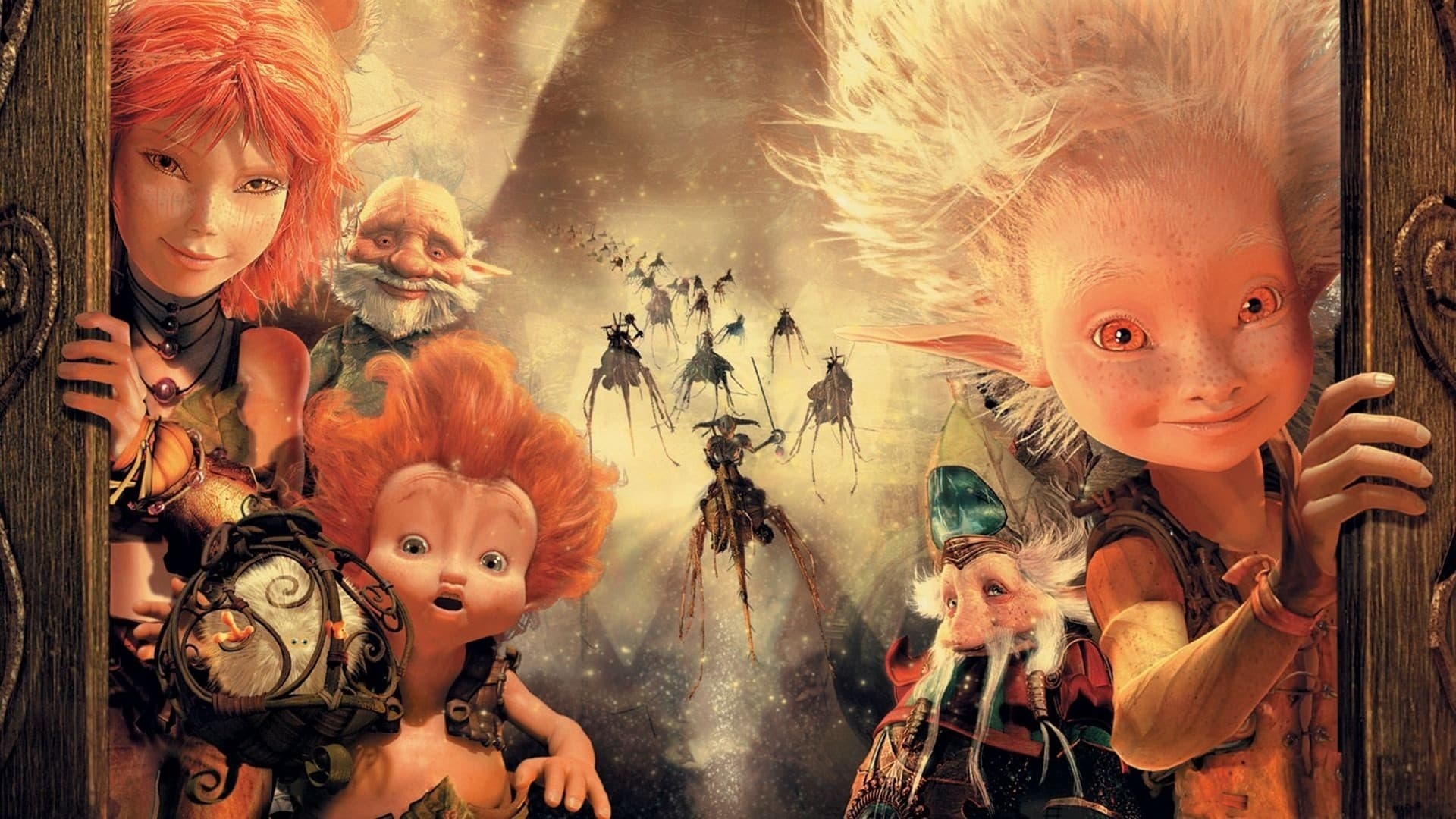
Princess Selenia, whose narrative age is set at ten years old, is drawn with adult and sexualised forms, suggestive hip movements, and visual gags centred around her chest. This representation creates a profoundly incoherent gap between the character's stated age and her graphic treatment. The romantic relationship formed between Arthur and Selenia adds an extra layer of discomfort, especially when one considers that the Minimoy is supposed to be nearly a thousand years old. For parents, this is not a minor detail: it is a structural tension in the film that deserves to be named before or after viewing.
Violence
The violence remains within the register of children's adventure but it is present and concrete. Battles between the Minimoys and armed creatures, an insect decapitation presented with humour, a deadly chase through a tunnel, and a rotating blade descending upon Arthur all constitute moments of genuine tension. These sequences are not gratuitous in the strict sense: they serve the mechanics of the narrative and the hero's courage is their primary purpose. They remain nonetheless too intense for children under five or six years old, and may provoke strong reactions in sensitive children.
Substances
The film includes two distinct elements worth noting. A secondary character smokes what appears to be cannabis in a recreational context, without the film problematising or judging it. Furthermore, the young heroes drink a green drink presented as stimulating and strong, whose staging clearly mimics an alcoholic effect. Neither of these two elements is central to the narrative, but both are normalised by their humorous treatment, which justifies a brief conversation with children.
Underlying Values
The film carries strong moral messages: intelligence prevails over brute force, an ordinary child can stand up to a huge adversary, and greed embodied by both the property developer and the main villain Maltazard is systematically punished. The relationship to the environment and the preservation of a living space is also present in the background. These are real points of support for discussion after viewing.
Parental and Family Portrayals
Arthur's parents are explicitly ridiculed: presented as naïve, emotionally absent and unreliable, they contrast with his grandmother who embodies attentive, warm and initiating parenthood. This pattern, very common in children's adventure films, nonetheless deserves to be noted: Arthur must act alone precisely because his parents cannot support him. The film thus values the child's autonomy through parental default, which may resonate differently depending on the child's family experience.
Discrimination
Arthur's parents are the only case of a constructed and repeated stereotype in the film. Their representation is not accidental but scripted: they are functionally stupid so that the narrative can unfold without them. It is a classic narrative device but sufficiently marked that children will integrate it as a norm, hence the value of discussing it.
Strengths
The film possesses a genuine sense of wonder in its construction of the miniature world, with visual inventiveness that manages to render completely fictional creatures and spaces familiar. The idea that resourcefulness and intellectual curiosity are worth more than physical strength is carried with consistency and without condescension. The film also succeeds in conveying a form of tenderness towards grandparents as transmitters of knowledge and family myths, which constitutes a sincere emotional vector for young viewers.
Age recommendation and discussion points
The film is not recommended before the age of six due to tense sequences and frightening appearances, and can be watched confidently from seven or eight years old in the presence of an adult. Two discussion angles are called for after viewing: why is Selenia drawn as an adult when she is supposed to be ten years old, and what does that tell us about the images films propose to children about girls and boys; and also, how does Arthur find the strength to act when the adults in his life are not there to help him.
Synopsis
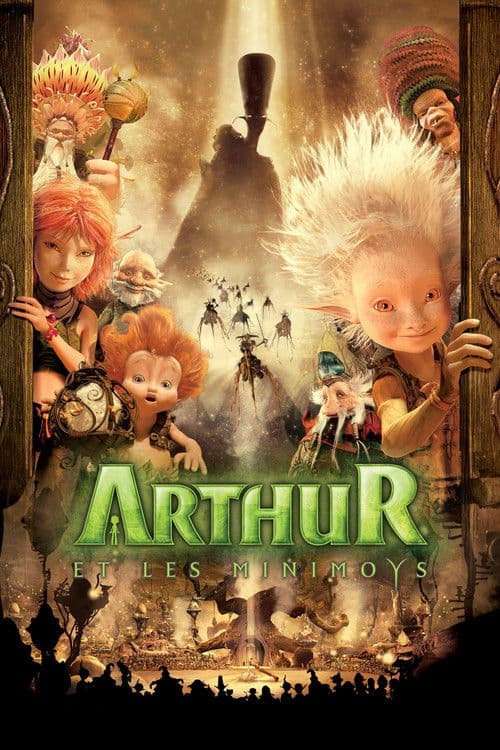
Ten-year-old Arthur, in a bid to save his grandfather's house from being demolished, goes looking for some much-fabled hidden treasure in the land of the Minimoys, tiny people living in harmony with nature.
Where to watch
Availability checked on Apr 26, 2026
About this title
- Format
- Feature film
- Year
- 2006
- Runtime
- 1h 43m
- Countries
- France
- Original language
- FR
- Directed by
- Luc Besson
- Main cast
- Freddie Highmore, Madonna, Mia Farrow, Adam LeFevre, Doug Rand, Penny Balfour, Ron Crawford, David Bowie, David Suchet, Robert De Niro
- Studios
- EuropaCorp, Avalanche Productions, Apipoulaï Prod
Content barometer
- Violence2/5Moderate
- Fear3/5Notable tension
- Sexuality3/5Moderate
- Language0/5None
- Narrative complexity2/5Moderate
- Adult themes2/5Present
Values conveyed
- Courage
- Friendship
- Perseverance
- Autonomy
- wonder
- family
- respect for nature