Arthur 3: The War of the Two Worlds
Arthur 3: la guerre des deux mondes
Arthur 3: The War of the Two Worlds
Arthur 3: la guerre des deux mondes
Your feedback improves this guide
Your feedback highlights guides that need a second look and keeps the rating trustworthy.
Does this age rating seem accurate to you?
Sign in to vote
Watch-outs
What this film brings
Content barometer
Violence
2/5
Moderate
Fear
3/5
Notable tension
Sexuality
0/5
None
Language
1/5
Mild
Narrative complexity
2/5
Moderate
Adult themes
0/5
None
Expert review
Arthur 3: The War of the Two Worlds is the third and final installment of Luc Besson's live-action and animated trilogy, in which the villain Maltazard, now grown to human size, threatens the real world while Arthur and his Minimoy companions race to regain their normal size and stop him. The film blends slapstick humor, tense chase sequences, and confrontations between heroes and villains, with a physically imposing main antagonist whose giant form and menacing behavior may startle younger viewers. Tense moments occur fairly regularly throughout, including a prolonged chase through household plumbing with Darkos, scenes in which Maltazard frightens the adult characters, and a climactic final battle, though the overall tone remains within the bounds of family adventure without graphic violence or adult content. Parents of children under 7 are encouraged to watch alongside them to provide reassurance during the more frightening sequences, particularly Maltazard's appearances, and can use the story as a springboard to discuss themes of courage, loyalty, and redemption.
Synopsis
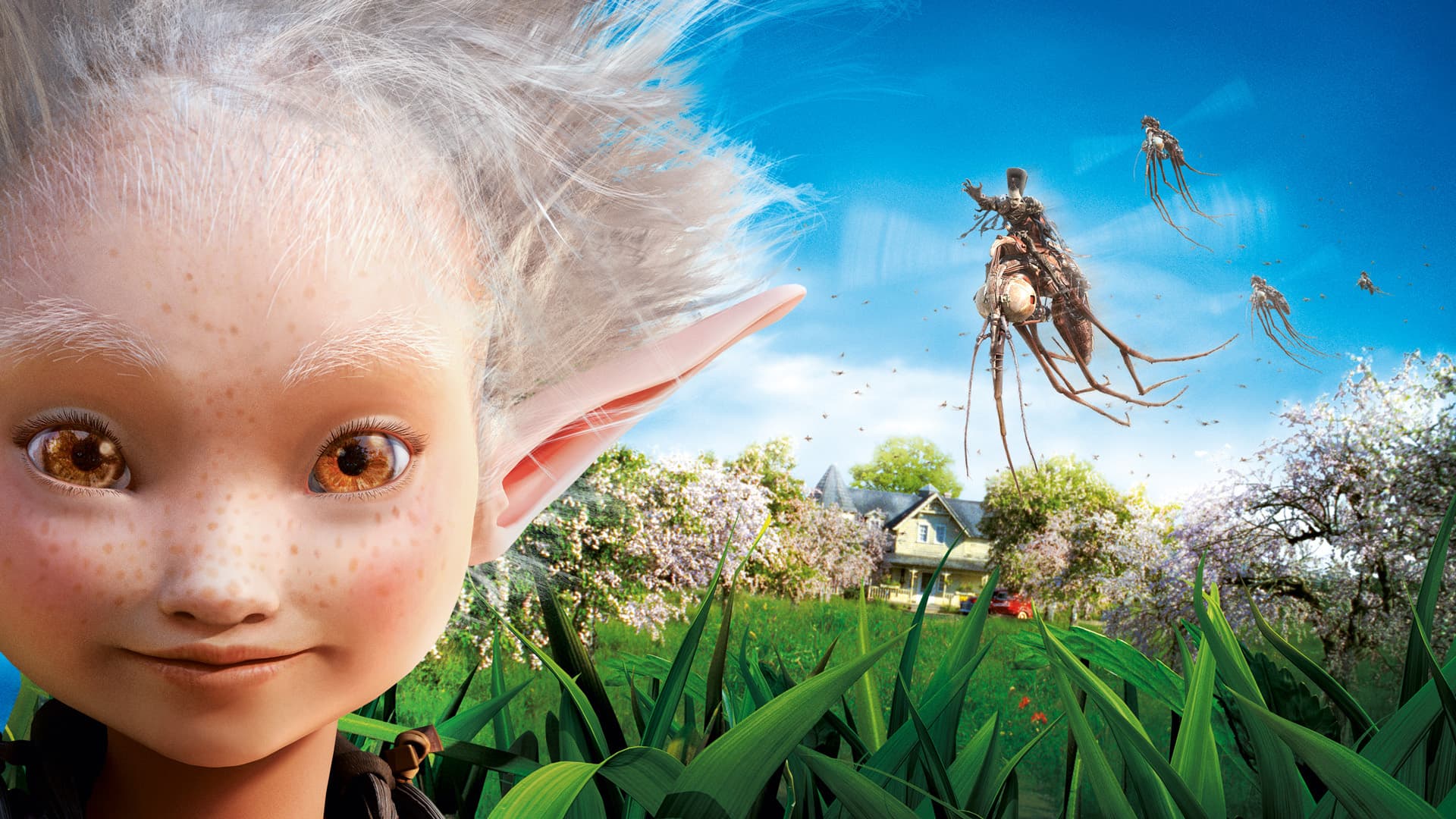
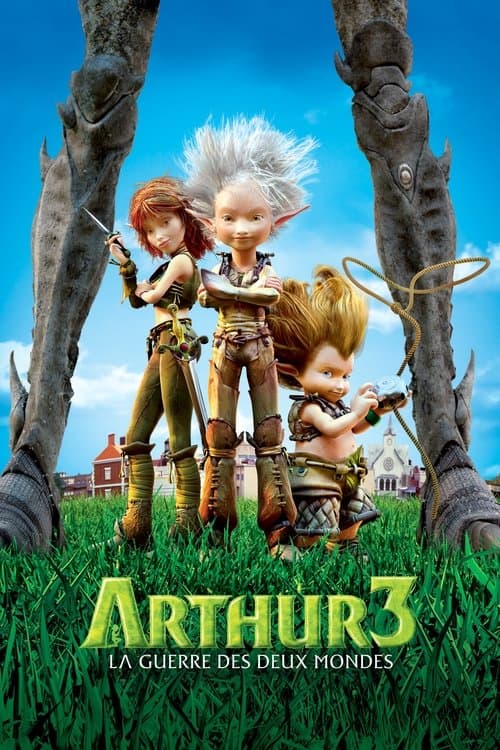
With Maltazard now seven feet tall and Arthur still two inches small, our hero must find a way to grow back to his normal size and stop the Evil M once and for all, with the help of Selenia and Betameche.
Difficult scenes
Maltazard, the film's main villain, now appears at human size, roughly seven feet tall. His unsettling appearance, deep voice, and aggressive behavior toward the adult characters he encounters may strongly disturb children under 6 or 7. The scene in which he visits a cosmetic surgery clinic to have his face altered, and the moment when grandmother Rose screams and faints upon seeing him, reinforce his threatening presence. The Minimoy trio is chased repeatedly by Darkos, Maltazard's son, through the household pipes and plumbing. These pursuit scenes in confined spaces, during which Darkos uses a blade to propel himself and attempts to capture Arthur, Selenia, and Betameche, create sustained tension that may cause anxiety in sensitive younger viewers. Maltazard reveals to grandmother Daisy that he has been watching her for a long time, which constitutes a form of psychological intrusion and threat directed at a protective adult figure. This type of moment may unsettle children who easily identify with family figures of safety and comfort. The climactic confrontation pits Arthur and Darkos against Maltazard in a direct physical showdown. While there is no graphic violence, the tension runs high and the outcome remains uncertain for a significant portion of the sequence, which may keep younger children in a prolonged state of worry.
Where to watch
No verified platform for the US market yet. We keep this section updated as availability changes.
About this title
- Format
- Feature film
- Year
- 2010
- Runtime
- 1h 43m
- Countries
- France
- Original language
- FR
- Directed by
- Luc Besson
- Main cast
- Freddie Highmore, Mia Farrow, Robert Stanton, Penny Balfour, David Gasman, Antony Hickling, Dashiell Eaves, Joseph Rezwin, Cooper Daniels, Ron Crawford
- Studios
- EuropaCorp, Apipoulaï Prod, Avalanche Productions
Content barometer
Violence
2/5
Moderate
Fear
3/5
Notable tension
Sexuality
0/5
None
Language
1/5
Mild
Narrative complexity
2/5
Moderate
Adult themes
0/5
None
Expert review
Arthur 3: The War of the Two Worlds is the third and final installment of Luc Besson's live-action and animated trilogy, in which the villain Maltazard, now grown to human size, threatens the real world while Arthur and his Minimoy companions race to regain their normal size and stop him. The film blends slapstick humor, tense chase sequences, and confrontations between heroes and villains, with a physically imposing main antagonist whose giant form and menacing behavior may startle younger viewers. Tense moments occur fairly regularly throughout, including a prolonged chase through household plumbing with Darkos, scenes in which Maltazard frightens the adult characters, and a climactic final battle, though the overall tone remains within the bounds of family adventure without graphic violence or adult content. Parents of children under 7 are encouraged to watch alongside them to provide reassurance during the more frightening sequences, particularly Maltazard's appearances, and can use the story as a springboard to discuss themes of courage, loyalty, and redemption.
Synopsis
With Maltazard now seven feet tall and Arthur still two inches small, our hero must find a way to grow back to his normal size and stop the Evil M once and for all, with the help of Selenia and Betameche.
Difficult scenes
Maltazard, the film's main villain, now appears at human size, roughly seven feet tall. His unsettling appearance, deep voice, and aggressive behavior toward the adult characters he encounters may strongly disturb children under 6 or 7. The scene in which he visits a cosmetic surgery clinic to have his face altered, and the moment when grandmother Rose screams and faints upon seeing him, reinforce his threatening presence. The Minimoy trio is chased repeatedly by Darkos, Maltazard's son, through the household pipes and plumbing. These pursuit scenes in confined spaces, during which Darkos uses a blade to propel himself and attempts to capture Arthur, Selenia, and Betameche, create sustained tension that may cause anxiety in sensitive younger viewers. Maltazard reveals to grandmother Daisy that he has been watching her for a long time, which constitutes a form of psychological intrusion and threat directed at a protective adult figure. This type of moment may unsettle children who easily identify with family figures of safety and comfort. The climactic confrontation pits Arthur and Darkos against Maltazard in a direct physical showdown. While there is no graphic violence, the tension runs high and the outcome remains uncertain for a significant portion of the sequence, which may keep younger children in a prolonged state of worry.