
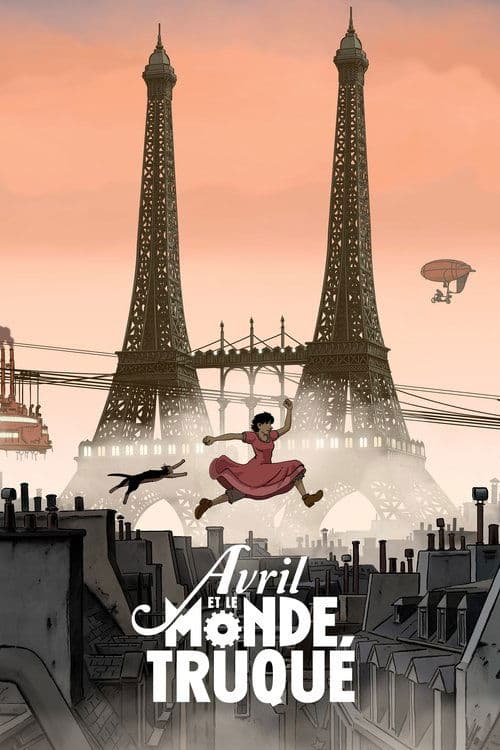
April and the Extraordinary World
Does this age rating seem accurate to you?
Detailed parental analysis
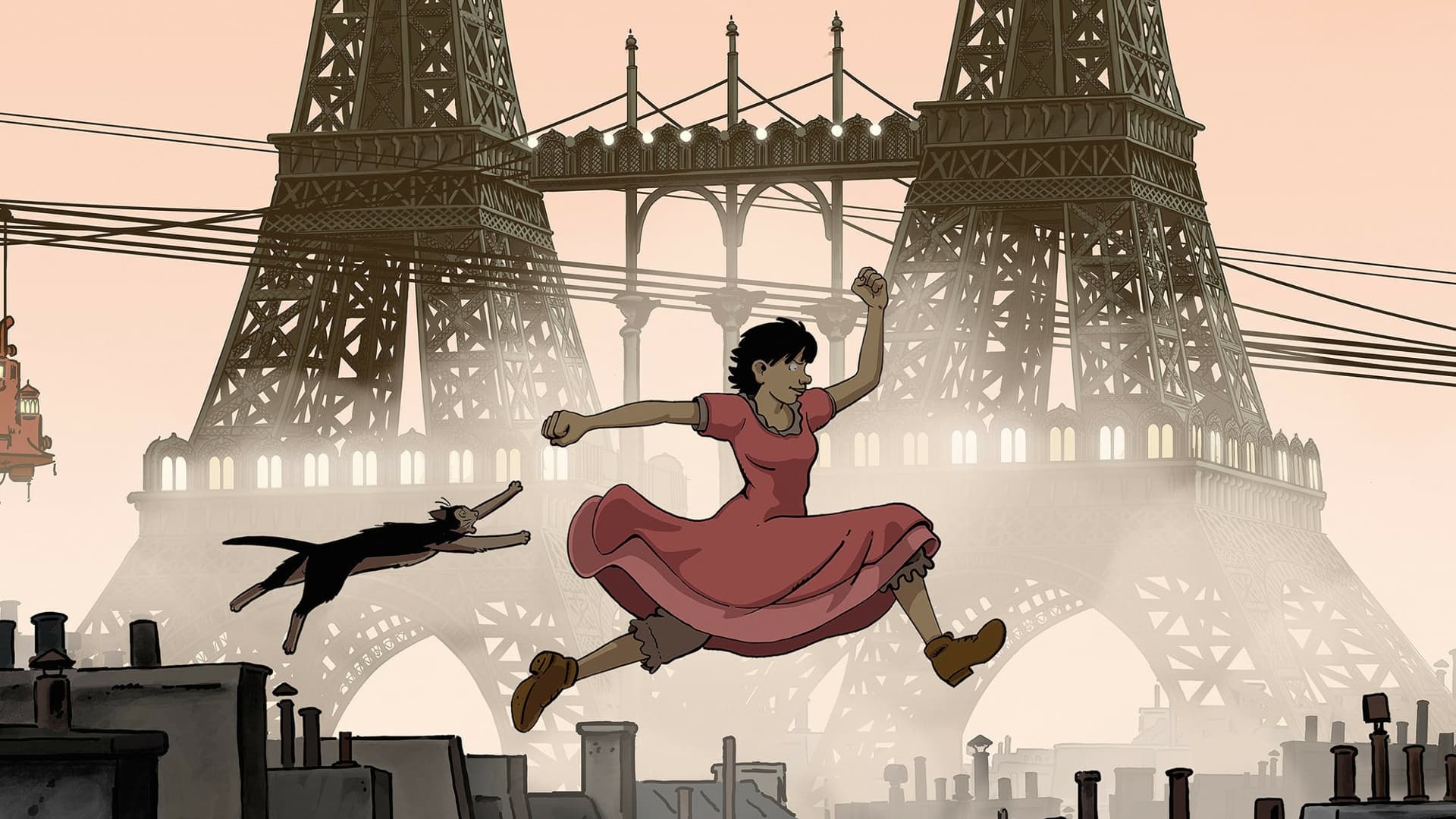
Avril and the Twisted World is an animated adventure film with a dark and melancholic atmosphere, rooted in an alternate steampunk universe where science has been diverted from its natural course. The plot follows a young girl seeking to find her missing parents whilst uncovering the secret of a conspiracy that has frozen the world in a state of technological regression. The film targets pre-adolescents and teenagers, but its narrative complexity and heavy tone make it poorly suited to young children.
Violence
Violence is present regularly and sometimes brutally for an animated film. In the opening minutes, the protagonist's parents are electrocuted and die on screen, a direct scene that immediately establishes a darker register than the genre average. Gunfire and energy weapons punctuate the narrative, and a character is shot at close range with visible blood. These elements serve a genuine narrative purpose: they construct grief, threat and dramatic stakes, never veering into gratuitous gore. They remain nonetheless intense for a young or sensitive child.
Social Themes
The film carries a coherent and deliberate political and ecological message. Unchecked industrial exploitation of natural resources is shown as a slow and irreversible catastrophe, and the militarisation of science is presented as a fundamentally destructive drift. These themes are not mere backdrop: they structure the plot and give the narrative a critical dimension on the relationship between power, knowledge and nature. This is particularly rich ground for discussion with a teenager.
Underlying Values
The narrative values scientific curiosity, perseverance and courage in the face of corrupt institutions. Challenging authority is presented as legitimate when that authority serves military or oppressive interests. Implicitly, the film defends a vision of science as a tool for emancipation rather than domination, which constitutes a structuring and positive message. Family loyalty is also a central driver of the narrative, without ever being idealised naively.
Parental and Family Portrayals
The parental figure is at the heart of the film: Avril's parents are loving and competent scientists, whose traumatic disappearance is the starting point of the entire adventure. Their absence structures the protagonist's grief and quest. The film treats parental loss with a certain gravity, without softening it, which can resonate strongly with children who have experienced separation or bereavement.
Discrimination
The protagonist is a young woman indifferent to her appearance, driven by intellectual curiosity and courage, without the narrative sexualising her or reducing her to a secondary role. This choice of representation stands out against the usual conventions of the genre and deserves to be flagged as a positive model, particularly for young female viewers.
Language
The dialogue in French contains a few occasional swear words, including at least one instance of 'merde'. The presence is light and not systematic, but it is worth noting for parents most attentive to language register.
Strengths
The film distinguishes itself through highly coherent artistic direction, constructing a visually inventive alternate universe where every detail of the setting participates in the logic of the world. The writing is ambitious for an animated film: it articulates adventure, grief, political critique and reflection on science without ever sacrificing narrative pace. The relationship between Avril and her cat Darwin offers a sincere emotional dimension that anchors the narrative in something concrete and endearing. For a curious pre-adolescent, the film constitutes a solid introduction to complex questions about scientific responsibility and humanity's relationship with nature.
Age recommendation and discussion points
The film is not recommended before age 8 due to the direct parental death in the opening and recurring violence, and can be watched comfortably from age 10 for a mature child. Two angles of discussion emerge after viewing: why did the scientists in the film choose to hide their discoveries rather than share them, and what does this say about the link between knowledge, power and responsibility? One can also explore together what the film's world, exhausted by limitless industry, says about our own relationship with the environment.
Synopsis
It's 1941, but France is trapped in the 19th Century, governed by steam and Napoleon V. Avril, a teenage girl, goes in search of her missing scientist parents.
About this title
- Format
- Feature film
- Year
- 2015
- Runtime
- 1h 45m
- Countries
- France, Canada, Belgium
- Original language
- FR
- Directed by
- Franck Ekinci, Christian Desmares
- Main cast
- Marion Cotillard, Philippe Katerine, Jean Rochefort, Olivier Gourmet, Marc-André Grondin, Bouli Lanners, Anne Coesens, Macha Grenon, Benoît Brière, Gérard Dessalles
- Studios
- StudioCanal, Je suis bien content, Kaïbou, Need Productions, ARTE France Cinéma, Jouror Distribution, RTBF, Proximus, Tchack
Content barometer
- Violence3/5Notable
- Fear3/5Notable tension
- Sexuality0/5None
- Language1/5Mild
- Narrative complexity2/5Moderate
- Adult themes0/5None
Values conveyed
- Courage
- Perseverance
- Loyalty
- family
- friendship
- science and curiosity
- resistance to oppression
- ecology
- solidarity