Apollo 10½: A Space Age Childhood
Apollo 10½: A Space Age Childhood
Your feedback improves this guide
Your feedback highlights guides that need a second look and keeps the rating trustworthy.
Does this age rating seem accurate to you?
Sign in to vote
Watch-outs
What this film brings
Content barometer
Violence
1/5
Mild
Fear
1/5
Mild
Sexuality
1/5
Allusions
Language
1/5
Mild
Narrative complexity
3/5
Complex
Adult themes
2/5
Present
Expert review
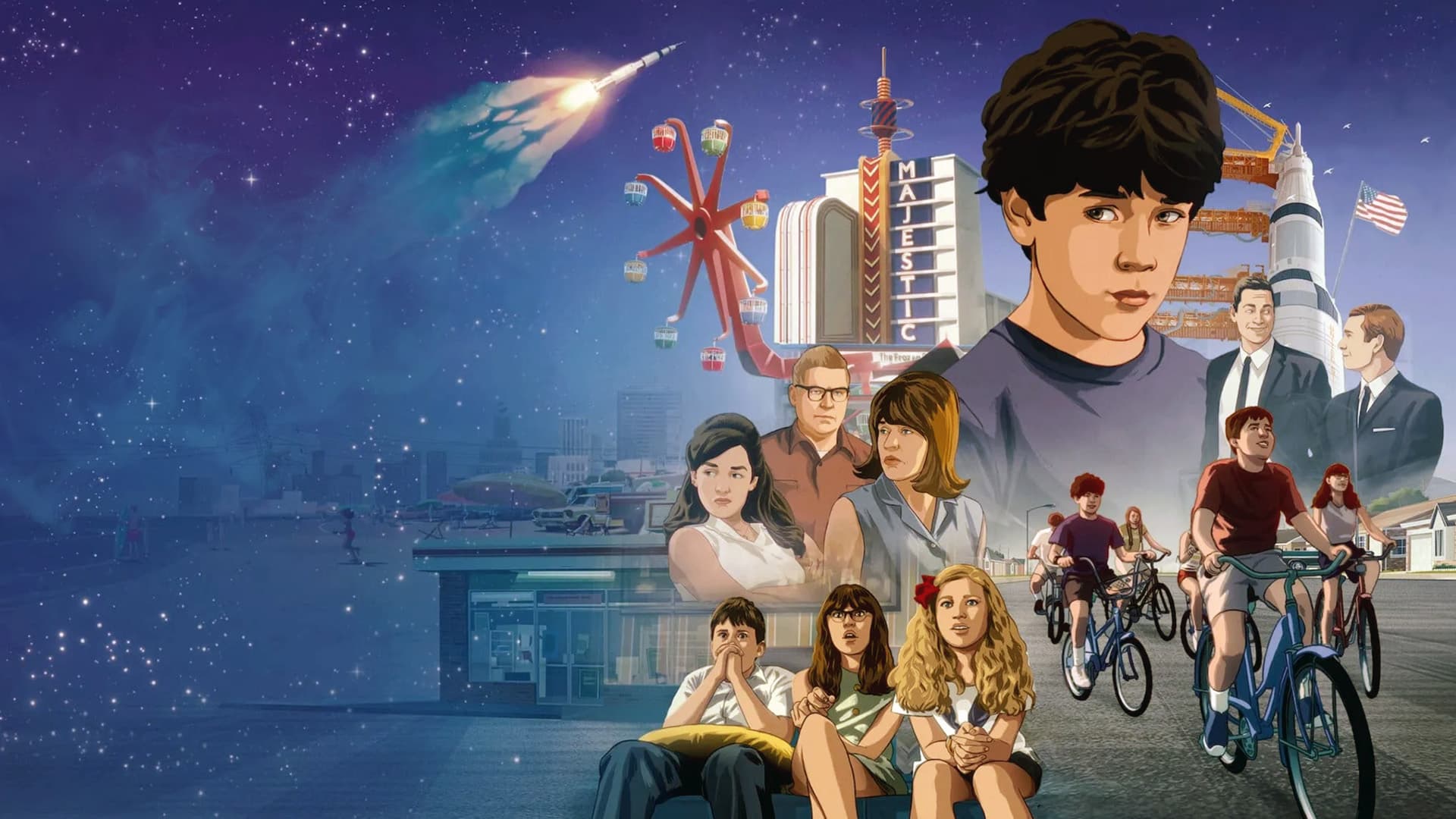
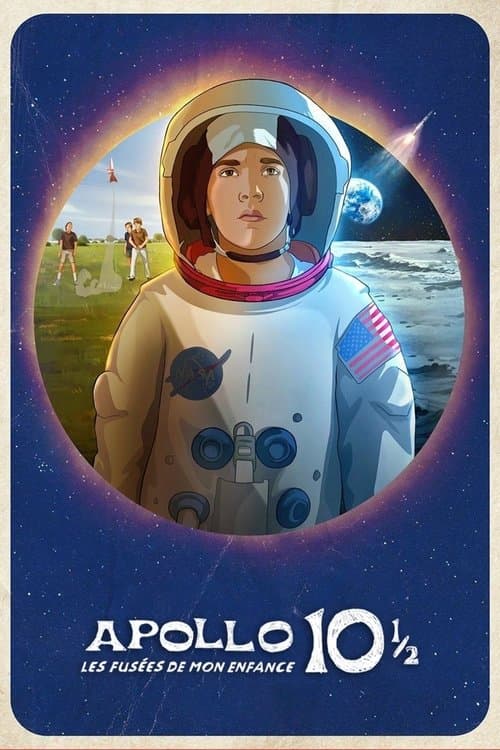
Apollo 10½: A Space Age Childhood is a rotoscope-animated film by Richard Linklater blending autobiographical nostalgia and playful fantasy around the summer of 1969 and the Apollo 11 mission, seen through the eyes of a 10-year-old boy growing up in Houston. The film is primarily a contemplative, melancholic work aimed at an adult or mature teenage audience, with a detached voice-over narration that feels more like a cinematic essay than a conventional adventure film. Sensitive elements are mostly contextual and thematic, including references to the Vietnam War, Cold War nuclear threats, background mentions of death in a historical context, and adult characters drinking and smoking in a period-accurate setting without glorification. Parents should be aware that despite its animation style, this is not a children's film, and it will feel slow and inaccessible to children under 10 or 12, but can become a rewarding conversation starter about space history and 1960s America for preteens and teens.
Synopsis
A man narrates stories of his life as a 10-year-old boy in 1969 Houston, weaving tales of nostalgia with a fantastical account of a journey to the moon.
Difficult scenes
Throughout the film, the adult voice-over references the historical context of the era with direct mentions of the Vietnam War, soldiers dying in combat, and the threat of nuclear conflict with the USSR. These references are not illustrated graphically but are stated clearly, which may surprise or worry a sensitive or young child who is not yet familiar with this historical background. Adult characters are shown smoking cigarettes and consuming alcohol across several scenes of family and social life, presented as an accurate reflection of the habits of the time. These behaviors are depicted in a neutral, non-glorified way, but they are visible and recurring, particularly during family gatherings and evening scenes. The narration periodically evokes death as a historical or existential reality, particularly in connection with the war and the risks of the space program. While these mentions remain distanced and are never shown dramatically or visually, they create an undercurrent of gravity that very young children will not be able to process without adult support. The overall pace of the film is very slow and driven by a contemplative voice-over narration that implicitly addresses an adult audience. Children under 10 are likely to disengage quickly, not because of frightening content, but because the film assumes a level of historical knowledge and narrative patience that goes beyond their developmental stage.
Where to watch
No verified platform for the US market yet. We keep this section updated as availability changes.
Availability checked on Apr 01, 2026
About this title
- Format
- Feature film
- Year
- 2022
- Runtime
- 1h 37m
- Countries
- United States of America, Netherlands
- Original language
- EN
- Directed by
- Richard Linklater
- Main cast
- Milo Coy, Jack Black, Lee Eddy, Bill Wise, Natalie L'Amoreaux, Josh Wiggins, Jessica Brynn Cohen, Sam Chipman, Danielle Guilbot, Zachary Levi
- Studios
- Detour Filmproduction, Submarine
Content barometer
Violence
1/5
Mild
Fear
1/5
Mild
Sexuality
1/5
Allusions
Language
1/5
Mild
Narrative complexity
3/5
Complex
Adult themes
2/5
Present
Expert review
Apollo 10½: A Space Age Childhood is a rotoscope-animated film by Richard Linklater blending autobiographical nostalgia and playful fantasy around the summer of 1969 and the Apollo 11 mission, seen through the eyes of a 10-year-old boy growing up in Houston. The film is primarily a contemplative, melancholic work aimed at an adult or mature teenage audience, with a detached voice-over narration that feels more like a cinematic essay than a conventional adventure film. Sensitive elements are mostly contextual and thematic, including references to the Vietnam War, Cold War nuclear threats, background mentions of death in a historical context, and adult characters drinking and smoking in a period-accurate setting without glorification. Parents should be aware that despite its animation style, this is not a children's film, and it will feel slow and inaccessible to children under 10 or 12, but can become a rewarding conversation starter about space history and 1960s America for preteens and teens.
Synopsis
A man narrates stories of his life as a 10-year-old boy in 1969 Houston, weaving tales of nostalgia with a fantastical account of a journey to the moon.
Difficult scenes
Throughout the film, the adult voice-over references the historical context of the era with direct mentions of the Vietnam War, soldiers dying in combat, and the threat of nuclear conflict with the USSR. These references are not illustrated graphically but are stated clearly, which may surprise or worry a sensitive or young child who is not yet familiar with this historical background. Adult characters are shown smoking cigarettes and consuming alcohol across several scenes of family and social life, presented as an accurate reflection of the habits of the time. These behaviors are depicted in a neutral, non-glorified way, but they are visible and recurring, particularly during family gatherings and evening scenes. The narration periodically evokes death as a historical or existential reality, particularly in connection with the war and the risks of the space program. While these mentions remain distanced and are never shown dramatically or visually, they create an undercurrent of gravity that very young children will not be able to process without adult support. The overall pace of the film is very slow and driven by a contemplative voice-over narration that implicitly addresses an adult audience. Children under 10 are likely to disengage quickly, not because of frightening content, but because the film assumes a level of historical knowledge and narrative patience that goes beyond their developmental stage.