

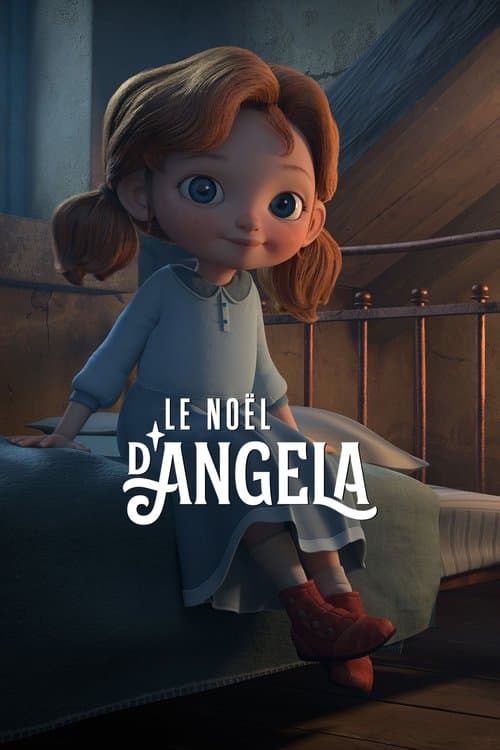
Angela's Christmas
Does this age rating seem accurate to you?
Detailed parental analysis
Angela's Christmas is a warm and luminous animated short film, tinged with a light narrative tension that remains always controlled. The story follows a young Irish girl from the early twentieth century who, moved by the loneliness of a statue of the Christ Child in a church, decides to act in her own way to remedy it. The film is primarily aimed at young children and their families, with the atmosphere of an accessible and benevolent Christmas tale.
Underlying Values
The film builds its entire narrative around spontaneous generosity and childhood empathy, without ever moralising them heavily. Angela acts from an instinct of kindness, and the narrative validates this impulse even when she breaks a rule for good reasons: this is the only morally complex message in the film, and it deserves to be discussed with the child. Catholic faith is present as a natural cultural and emotional framework, without heavy-handed proselytising. Family bonds, particularly between mother and children, are represented as a source of fundamental warmth and security.
Parental and Family Portrayals
The maternal figure is central and particularly well handled: she is both firm and loving, capable of understanding her daughter's motivations beyond the transgression. The father is absent from the narrative, without this absence being dramatised or explained, which may prompt a question from some children. The siblings are represented in a lively way, with their normal frictions and moments of complicity.
Violence
Violence is incidental and without gravity: a scuffle between siblings with a few blows that ends in play, and a brief sequence where Angela, alone in the night, believes she is being followed and finds herself briefly pursued by a policeman. These moments are resolved quickly and without traumatic consequence. They may nevertheless surprise the most sensitive or youngest children.
Language
An exchange between siblings includes the English word 'maggot' used as a mild insult. In the original version, the term is perceptible and may catch the attention of an inquisitive child. It is not repeated and remains without real narrative weight.
Substances
A brief scene takes place in a bar where men are drinking alcohol. The consumption is neither valorised nor commented upon, and the scene has no particular narrative weight. It simply reflects the social context of the period depicted.
Strengths
The film draws its strength from a remarkable narrative economy for a short format: in less than thirty minutes, it establishes a period, a family, a tension and a convincing emotional resolution. The writing respects the intelligence of young viewers by never over-explaining Angela's motivations, allowing empathy to speak for itself. The reconstruction of early twentieth-century Ireland gives the narrative an authentic cultural texture, far from the generic settings of the genre. It is a film that works equally well for the child and for the adult accompanying them, each reading something different into it.
Age recommendation and discussion points
The film is suitable from five or six years old, with parental presence recommended for younger children who might be slightly anxious during the night-time sequence. Two angles of discussion are worth exploring after viewing: asking the child whether Angela was right to take something that did not belong to her, even for a good reason, and exploring with them what it means to feel compassion for someone or something vulnerable.
Synopsis
A trip to church with her family on Christmas Eve gives young Angela an extraordinary idea. A heartwarming tale based on a story by Frank McCourt.
About this title
- Format
- Short film
- Year
- 2017
- Runtime
- 30m
- Countries
- Ireland
- Original language
- EN
- Directed by
- Damien O'Connor
- Main cast
- Lucy O'Connell, Ruth Negga, Brian Gleeson, Pat Kinevane, Malachy McCourt, Janet Moran, Des Nealon, Don Wycherley
- Studios
- Brown Bag Films
Content barometer
- Violence1/5Mild
- Fear1/5Mild
- Sexuality0/5None
- Language1/5Mild
- Narrative complexity0/5Simple
- Adult themes1/5Mild
Watch-outs
Values conveyed
- Courage
- Compassion
- Forgiveness
- family
- generosity
- empathy