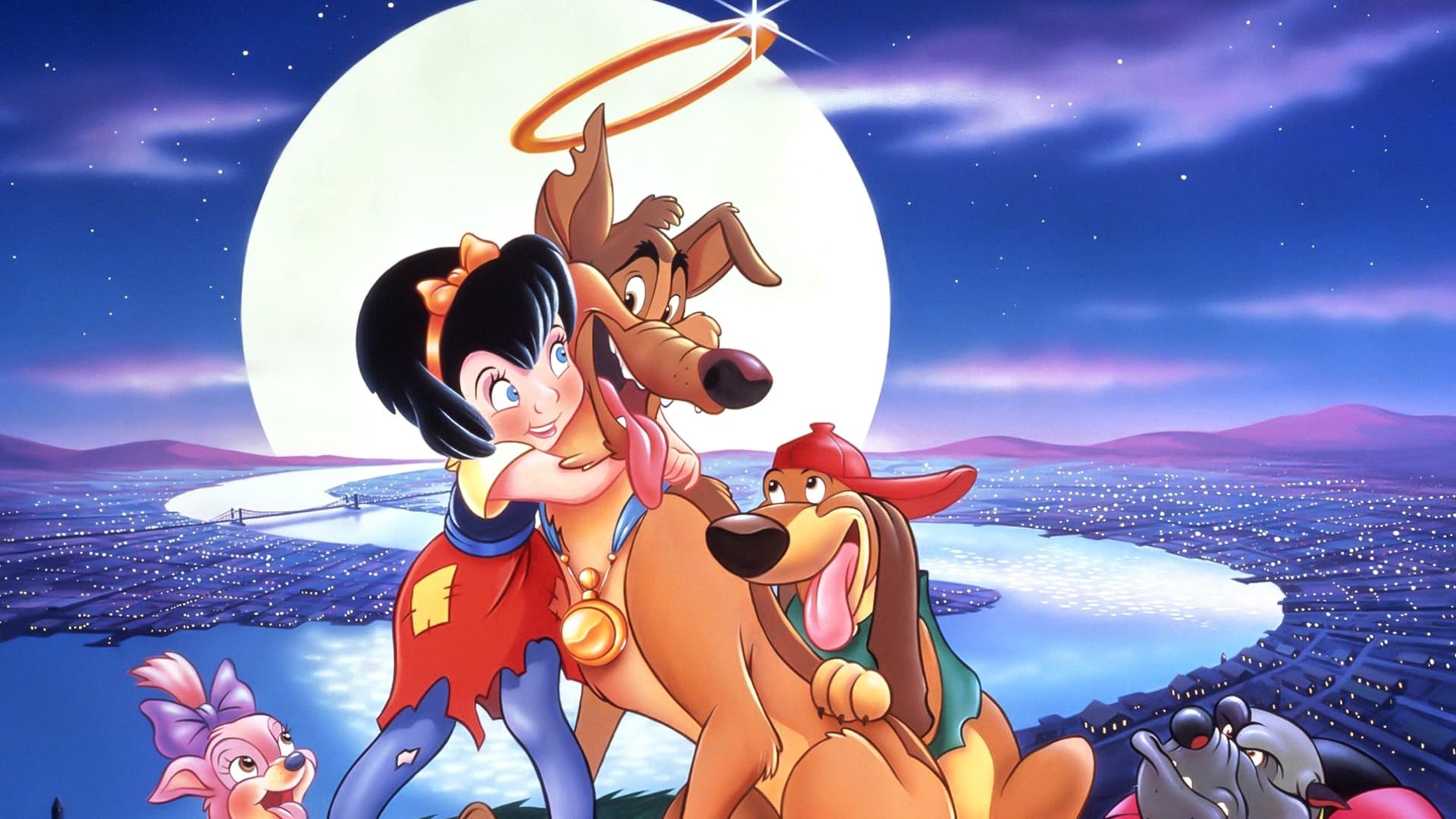

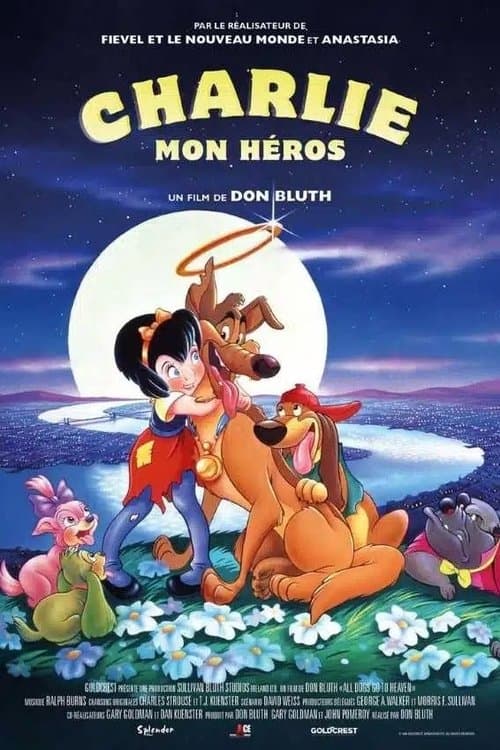
All Dogs Go to Heaven
Does this age rating seem accurate to you?
Detailed parental analysis
Charlie, My Hero is an animated film with a surprisingly dark atmosphere for a cartoon aimed at young children, blending light comedy, adventure and frankly distressing sequences. The story follows a con artist dog who, returned from the dead, befriends a small orphan girl capable of speaking to animals. The film appears to target young children, but its actual content makes it unsuitable for this audience without attentive parental supervision.
Violence
The film opens with the death of the protagonist, struck by a car, and quickly moves into a long nightmarish sequence depicting hell with skeletal demons, omnipresent flames and a fire-breathing demonic creature. These images are visually intense and designed to be terrifying, not merely unsettling. The antagonist character is devoured alive by an alligator on screen. A small girl nearly drowns in burning water and is explicitly threatened with death. The violence is not gratuitous in an aesthetic sense; it serves narrative tension, but its intensity far exceeds what a child under 7 or 8 years old can absorb without distress.
Underlying Values
The narrative is structured around a genuine arc of redemption: the protagonist, selfish and manipulative, gradually learns that friendship and sacrifice are worth more than wealth or revenge. This message is carried with consistency throughout and constitutes the true moral heart of the film. In parallel, the narrative directly addresses themes of death, the afterlife and damnation, with existential anxiety about the value of a life and the possibility of forgiveness. These themes are treated with a certain depth for an animated film, making it an interesting basis for discussion, but also emotionally charged content for younger viewers.
Substances
Dogs drink alcohol in a bar, some until they fall and lose consciousness. Cigars are smoked by several characters, and the villain deliberately blows his smoke in the face of a small orphan girl. These behaviours are shown without being explicitly condemned in the narrative, integrated into the film's underworld atmosphere. For a young child, the absence of moral commentary on these scenes warrants being pointed out.
Discrimination
A musical sequence contains a racist caricature of an Asian character: a character places a cymbal as a conical hat, squints his eyes and bares his teeth in a stereotyped imitation. This representation is brief but unambiguous, and is never questioned or distanced by the narrative. This is a point to name explicitly with a child if the scene is viewed.
Parental and Family Portrayals
The small girl at the centre of the narrative is an orphan without family, exploited by malevolent adults for their financial interests. She is kidnapped, forced to work for illegal gambling, and physically threatened. Protective adult figures are absent or failing until the protagonist's intervention. This pattern of a vulnerable child left to fend for herself is recurring and may resonate differently depending on the sensitivity of the young viewer.
Strengths
The film carries genuine narrative ambition for an animated film of its era: it does not simplify death, does not promise an easy happy ending and builds a morally imperfect main character whose transformation is gradual and credible. The relationship between the dog and the orphan girl is touching and well-written, with authentic warmth that counterbalances the darkest sequences. For an older child or teenager, the film offers a concrete entry point into questions about the value of a life, the meaning of sacrifice and the possibility of redemption, making it a richer basis for discussion than its appearance as a children's cartoon would suggest. It should also be noted that the voice of the small girl was recorded by an actress who died before the film's release, which gives certain scenes a particular emotional charge for adults who know this.
Age recommendation and discussion points
The film is not recommended for children under 7 years old without parental supervision, and can be viewed comfortably from 8 or 9 years old with an adult available to discuss it. Two angles of discussion naturally emerge after viewing: why does Charlie ultimately deserve to go to heaven, and what makes a life good according to the film? And also, more concretely, how to respond to a racist image in an animated film that you otherwise love.
Synopsis
When a casino-owning dog named Charlie is murdered by his rival Carface, he finds himself in Heaven. Wanting to get back at his killer, he cons his way back to the living with the warning that doing so damns him to Hell. Once back, he teams with his old partner, Itchy, to prep his retaliation. He stumbles upon an orphan girl who can talk to the animals, thus allowing him to get the inside info on the races to ensure his wins to finance his plans. However, all the while, he is still haunted by nightmares of what's waiting for him on the other side unless he can prove that he is worthy of Heaven again.
Where to watch
Availability checked on Apr 28, 2026
About this title
- Format
- Feature film
- Year
- 1989
- Runtime
- 1h 23m
- Countries
- Ireland, United Kingdom, United States of America
- Original language
- EN
- Directed by
- Don Bluth
- Main cast
- Burt Reynolds, Dom DeLuise, Judith Barsi, Vic Tayback, Melba Moore, Ken Page, Charles Nelson Reilly, Nigel Pegram, Loni Anderson, Godfrey Quigley
- Studios
- Goldcrest, Don Bluth Entertainment, Don Bluth Ireland
Content barometer
- Violence3/5Notable
- Fear4/5Intense
- Sexuality0/5None
- Language0/5None
- Narrative complexity2/5Moderate
- Adult themes2/5Present
Values conveyed
- Friendship
- Compassion
- Forgiveness
- redemption
- loyalty
- protection