
Aladdin
Does this age rating seem accurate to you?
Detailed parental analysis
Aladdin is a Disney musical adventure comedy with a bright and colourful atmosphere, punctuated by genuinely frightening sequences. The plot follows a young street thief who, through a magical lamp, attempts to win the heart of a princess and thwart the schemes of an ambitious vizier. The film is designed for children of school age and above, but certain scenes make it unsuitable for younger children.
Violence
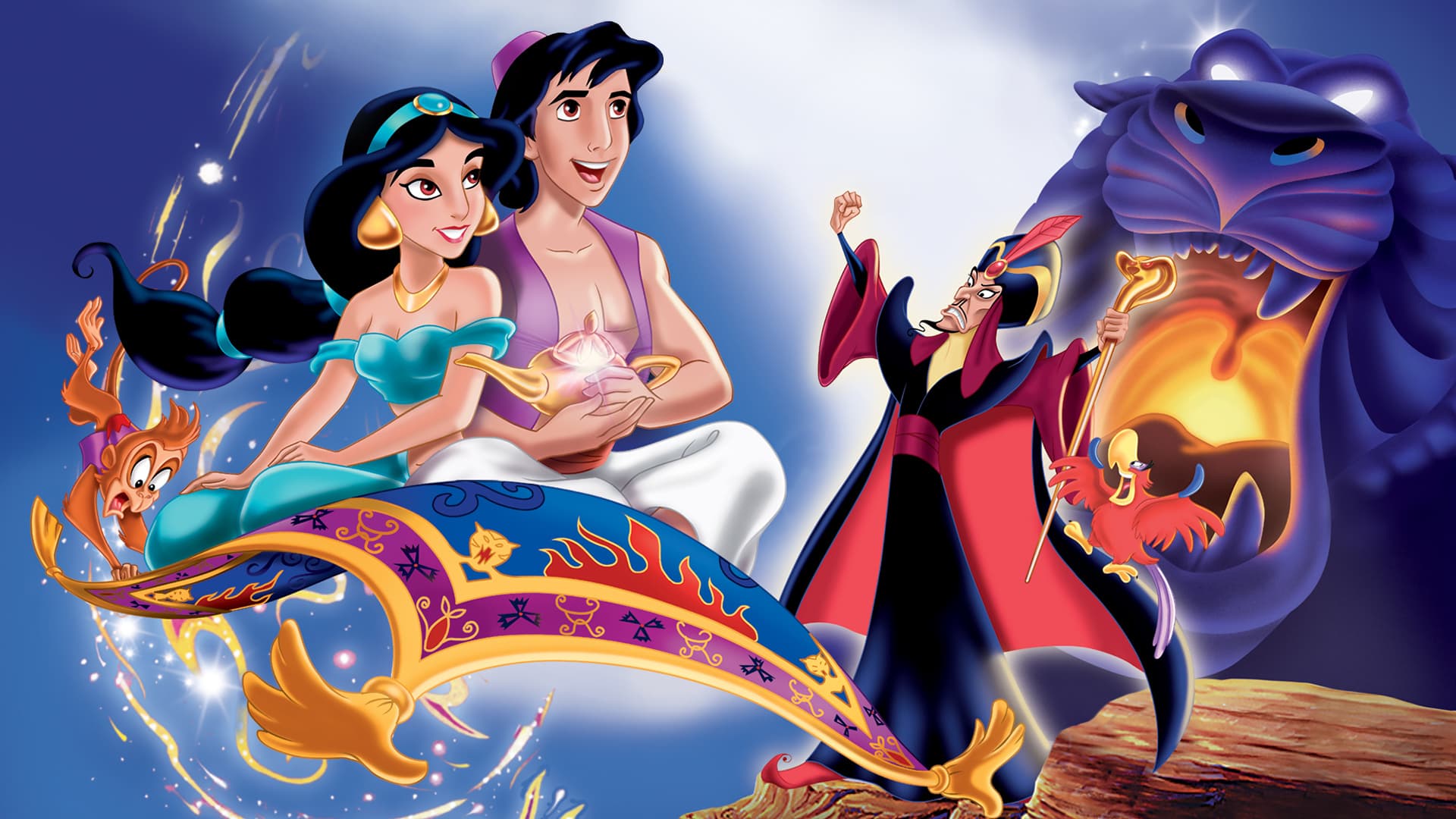
Violence is the primary concern with this film for young children. Jafar threatens Aladdin with death repeatedly, stabs him and sends him to drown chained at the bottom of the water. The dialogue contains frankly aggressive turns of phrase, including allusions to slit throats and severed hands used as paperweights. The Cave of Wonders, with its animated tiger mouth that swallows a character, is deliberately designed to be terrifying. Jafar's transformation into a giant venomous serpent represents the climax of this tension. These elements fit within a clear narrative logic, good versus evil, and are never gratuitous, but their intensity is genuine and can lastingly frighten a child under 6 or 7 years old.
Underlying Values
The narrative carries a solid and well-constructed message about honesty: Aladdin gradually comes to understand that lying, even in service of a noble ambition, weakens his relationships and his identity. The resolution rests on the courage to show oneself as one truly is. In parallel, the film values tangible generosity from the opening minutes onwards, with Aladdin sharing his stolen bread with children more deprived than himself, and sets this generosity against Jafar's ruthless greed. The feminist message carried by Jasmine is direct and unambiguous: she refuses to be treated as a commodity to be married off, asserts her right to choose her own life and rejects the passivity imposed upon her. These structural values make the film a solid basis for discussion with parents.
Discrimination
The film has been subject to criticism based on the representation of Arab characters. The sympathetic protagonists, Aladdin and Jasmine, are drawn with features close to Western standards and speak with American accents, whilst the antagonistic or negatively portrayed secondary characters display exaggerated Arab features and foreign accents. The opening song originally contained an allusion to the barbarous nature of Arab culture; Disney partially altered these lyrics in 1993 following protests from the Arab-American community, but the word in question was retained. These graphic and linguistic choices reflect the biases of the era that deserve to be named with a child old enough to perceive them.
Parental and Family Portrayals
Aladdin is an orphan with no visible family, which gives the film its initial hue of solitude and resourcefulness. The Sultan, Jasmine's father, is portrayed as a benevolent man but naive and easily manipulated, incapable of protecting his daughter from Jafar's scheming. This figure of failing authority reinforces the idea that the young protagonists must fend for themselves, a classic tale motif, but one that may warrant commentary.
Strengths
Aladdin remains one of the most accomplished animated films of its era on musical and narrative grounds. The songs are remarkably well written, memorable and functionally integrated into the plot rather than simply laid over it. The Genie character brings comic vitality and visual inventiveness that have not dated. The pacing is assured, the writing of the main characters is sufficiently nuanced to avoid pure caricature, and Aladdin's story, that of a poor young man confronted with the temptation to pass himself off as something he is not, carries a universal emotional resonance that speaks to both children and adults.
Age recommendation and discussion points
The film is not recommended before age 6 due to several genuinely frightening sequences, and is fully appropriate from age 7 onwards. Two angles of discussion are particularly worth exploring after viewing: ask the child why Aladdin ultimately chooses to tell the truth even though it costs him something, and draw his attention to the fact that the kind and cruel characters do not resemble each other visually at all, asking him what he thinks about that.
Synopsis
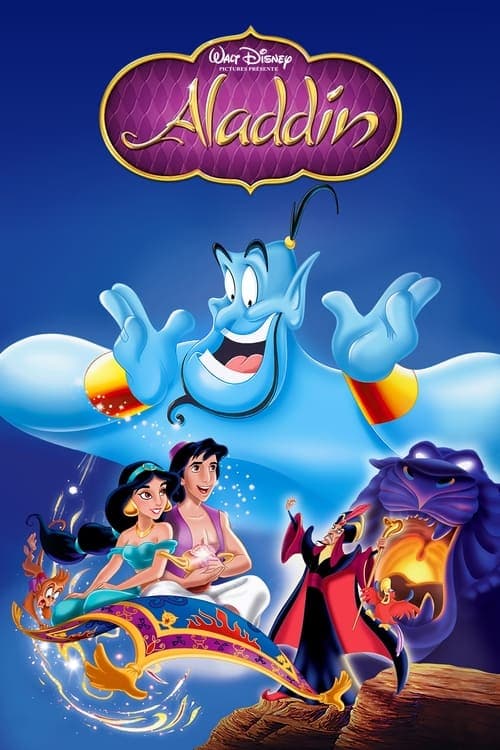
In the boorish city of Agrabah, kind-hearted street urchin Aladdin and Princess Jasmine fall in love, although she can only marry a prince. He and power-hungry Grand Vizier Jafar vie for a magic lamp that can fulfill their wishes.
About this title
- Format
- Feature film
- Year
- 1992
- Runtime
- 1h 30m
- Countries
- United States of America
- Original language
- EN
- Studios
- Walt Disney Feature Animation
Content barometer
- Violence3/5Notable
- Fear4/5Intense
- Sexuality0/5None
- Language1/5Mild
- Narrative complexity1/5Accessible
- Adult themes0/5None
Watch-outs
- Death
- Ethnic or racial stereotypes
Values conveyed
- Courage
- Compassion
- Loyalty
- Autonomy
- friendship
- self-confidence
- freedom
- honesty
- generosity
- love