
Akira
AKIRA
Does this age rating seem accurate to you?
Detailed parental analysis
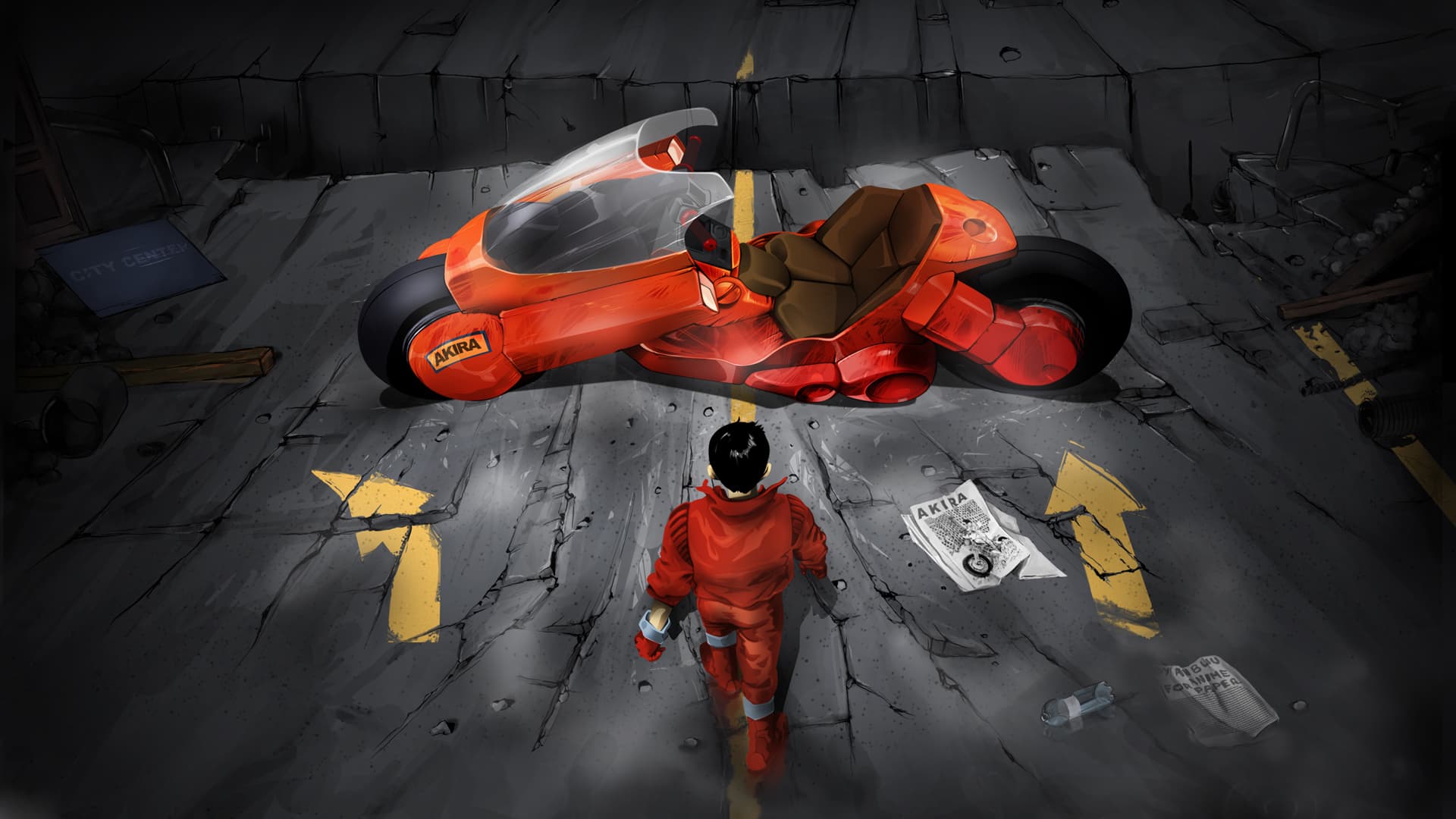
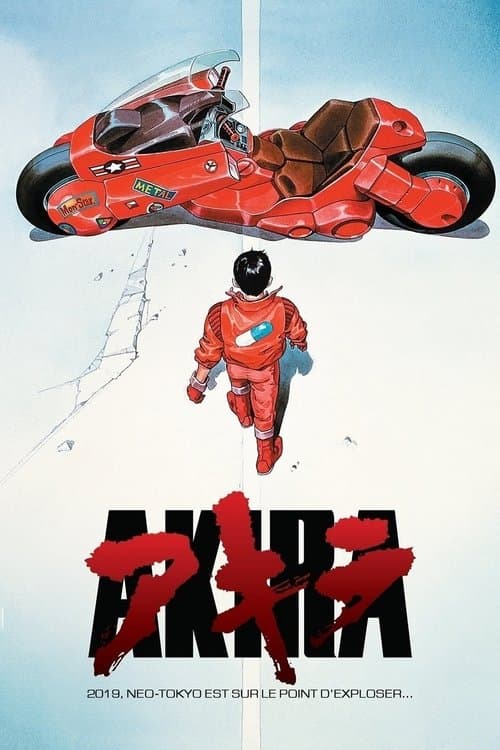
Akira is a Japanese animated film with a dark, oppressive and viscerally violent atmosphere, regarded as a foundational work of the cyberpunk genre. In a futuristic Tokyo ravaged by corruption and political instability, a teenager discovers uncontrollable psychic powers that threaten to destroy the city and those around him. The film unambiguously addresses an adult and older teenage audience, and has no aspiration to be accessible to all viewers despite its animated format.
Violence
Violence is omnipresent, intense and frequently gory. The film accumulates shootings with visible blood, dismemberment, sequences of body horror where a character's entrails spill onto the ground, and traumatic physical transformations. This violence is not entirely gratuitous: it serves a reflection on loss of control, the corruption of power and the disintegration of identity. Yet its graphic degree far exceeds what the envelope of an animated film might lead one to anticipate, and several scenes are likely to provoke lasting images in sensitive adolescents. The execution of two dogs with visible blood, facial injury with matter projection, and the nightmarish sequence with monstrous giant plush toys are among the most striking passages.
Underlying Values
The film carries genuine philosophical themes about power, responsibility and the corruption of institutions. Military and governmental authority is depicted as secretive, manipulative and willing to experiment on children to serve its interests. This critical portrayal of the State constitutes a rich angle for discussion with an adolescent capable of engaging with it. The narrative also values friendship as a force for redemption, even in the face of irreversible transformation, and questions the boundary between power and destruction. The conclusion, deliberately abstract, refuses any simple moral resolution, which can be disorienting but also intellectually stimulating for a mature viewer.
Substances
Drugs occupy a genuine narrative place in the film: characters are shown as dependent on pills or capsules that play a central role in the plot. Consumption is not glamourised; it is instead associated with degradation, loss of control and death from unintentional overdose. Tobacco and alcohol are present regularly in the overall atmosphere. One character dies from the consequences of an overdose, and bodies of the suicided are visible in the background in one scene. These representations are consistent with the film's dystopian tone, but they require parental support to be properly contextualised.
Sex and Nudity
A scene of attempted rape appears in the first third of the film: it is direct, unambiguous, and concerns an adult female character. Brief female nudity is visible during a violent scene, and a scene of sexual groping appears in the background in a bar. These elements do not form the heart of the film but their presence, particularly the attempted sexual assault, calls for prior reflection on the appropriateness of viewing with a young spectator.
Social Themes
Akira is traversed by dense political critique: State experimentation on children, military repression, urban resistance movements, social collapse in a hyper-populated metropolis. These themes resonate with current questions about state control, scientific ethics and structural violence. For an adolescent capable of grasping them, they offer serious material for reflection on institutional abuses and the fragility of urban societies.
Language
The linguistic register is raw, with regular use of profanities including the strongest curses and insults such as 'bitch' or 'bastard'. This language is consistent with the street gang universe depicted in the film, but its frequency is notable.
Strengths
Akira is a work of rare visual and narrative coherence, constructing a futuristic universe of impressive density through every frame. The artistic direction is strikingly precise, with a sense of movement, light and urban architecture that has durably influenced world science-fiction cinema, far beyond the animated register alone. The film raises serious questions about individual responsibility in the face of power that exceeds the individual, about solidarity in a world coming apart, and about what institutions are prepared to sacrifice to maintain their control. Its narrative complexity and refusal of a reassuring ending make it an intellectually demanding experience, relevant for introducing a mature adolescent to a form of ambitious cinema that takes the spectator seriously.
Age recommendation and discussion points
Akira does not address those under 15 years old due to graphic violence, attempted rape, representations of drugs and the thematic density of the whole. For fully serene viewing, 16 years is the appropriate age. After the film, two angles of discussion impose themselves: why institutions supposed to protect their citizens can come to treat them as guinea pigs, and how far friendship can push someone to pursue a relationship with a person who has become dangerous and unrecognisable.
Synopsis
A secret military project endangers Neo-Tokyo when it turns a biker gang member into a rampaging psychic psychopath that only two teenagers and a group of psychics can stop.
About this title
- Format
- Feature film
- Year
- 1988
- Runtime
- 2h 4m
- Countries
- Japan
- Original language
- JA
- Studios
- MBS, Sumitomo Corporation, TOHO, Kodansha, Tokyo Movie Shinsha, Bandai, Hakuhodo, LaserDisc Corporation
Content barometer
- Violence5/5Very strong
- Fear4/5Intense
- Sexuality2/5Mild
- Language3/5Notable
- Narrative complexity2/5Moderate
- Adult themes3/5Marked
Values conveyed
- Friendship
- Loyalty
- resistance