Adventure Time
Does this age rating seem accurate to you?
Detailed parental analysis
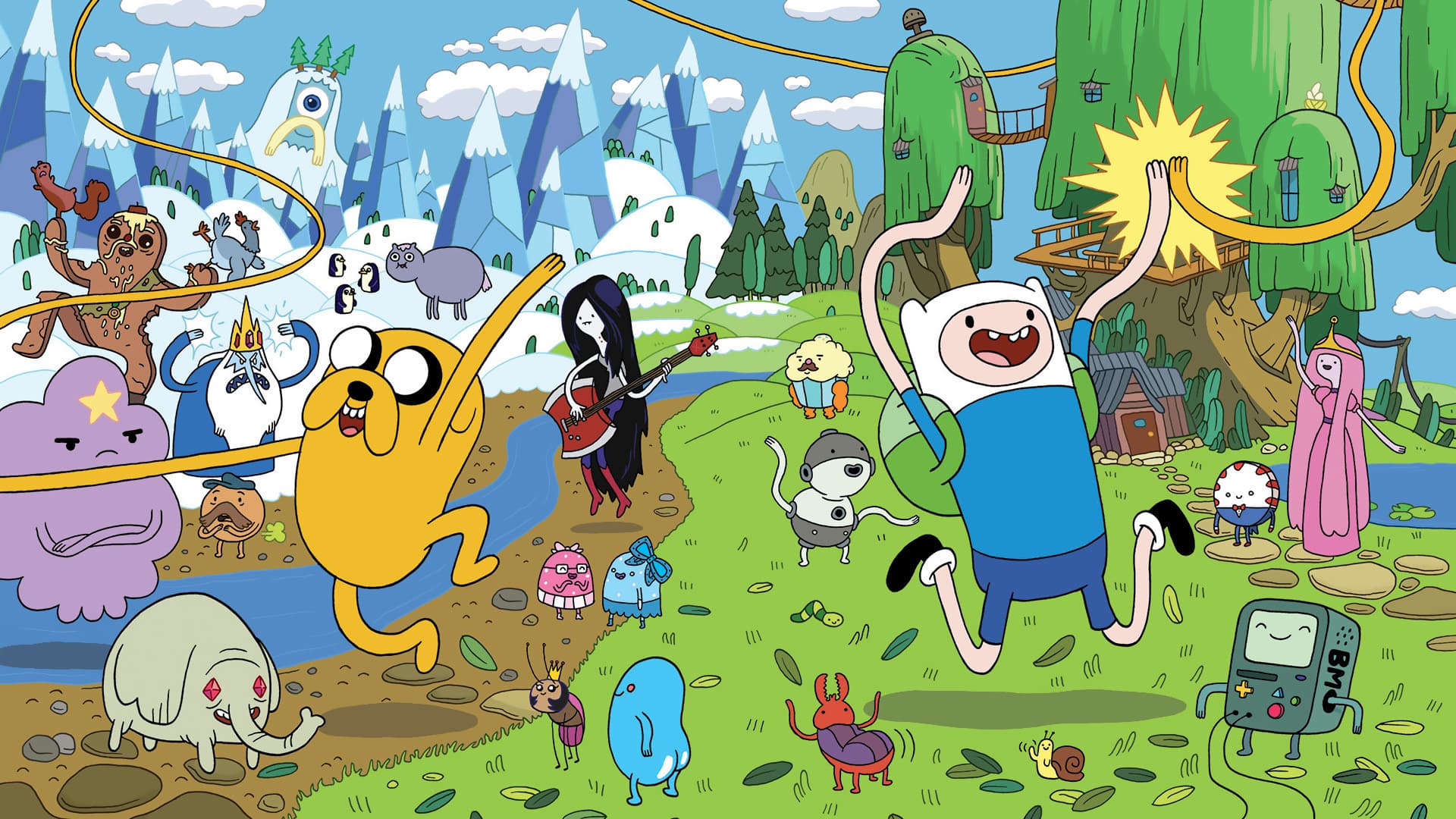
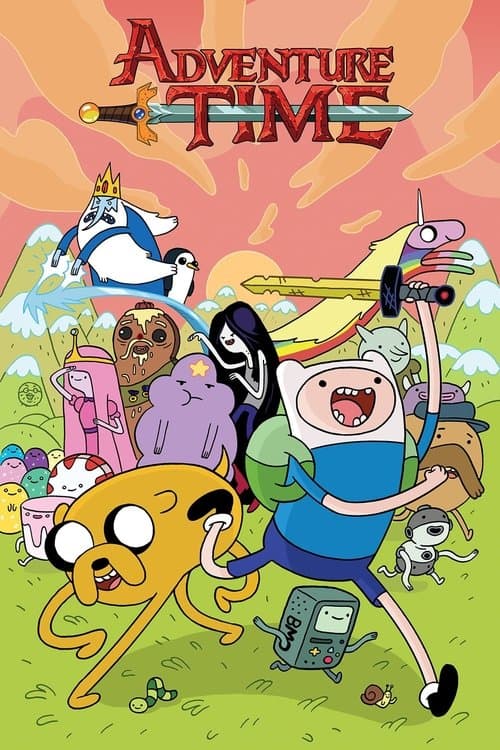
Adventure Time is an American animated series with an intentionally absurd and colourful tone that conceals, beneath its childlike appearance, writing that is far denser and emotionally more complex than its surface suggests. The plot follows Finn, a young human, and his best friend Jake, a dog with magical powers, through their heroic adventures across the post-apocalyptic world of Ooo. The series is primarily aimed at pre-adolescents, but it builds a lasting audience of teenagers and adults as its seasons progress and its themes deepen.
Underlying Values
The complete absence of parents or guardians is a structural feature of the series. Finn is the only known human in this world and lives without a biological family; Jake is his companion and not a responsible adult. This configuration normalises radical autonomy for adolescent characters without ever questioning it or showing its limits. Later seasons introduce more complex parental figures, but the fundamental narrative architecture remains that of children left to their own devices, which deserves to be contextualised for a young viewer.
Parental and Family Portrayals
The complete absence of parents or guardians is a structural feature of the series. Finn is the only known human in this world and lives without a biological family; Jake is his companion and not a responsible adult. This configuration normalises radical autonomy for adolescent characters without ever questioning it or showing its limits. Later seasons introduce more complex parental figures, but the fundamental narrative architecture remains that of children left to their own devices, which deserves to be contextualised for a young viewer.
Social Themes
The world of Ooo is explicitly a post-apocalyptic Earth, rebuilt after a nuclear war called the Mushroom War. This backdrop, subtle in the early seasons, becomes increasingly central and anchors the series in a diffuse reflection on civilisational destruction and collective memory. The figure of the Ice King, whose tragic trajectory metaphorically evokes dementia and progressive loss of identity, adds a thematic layer that the youngest children will not perceive but which adolescents experience fully.
Violence
Violence is present in the form of sword, sabre and flame encounters, generally directed against fantastical creatures. It remains within the norms of the children's heroic fantasy genre and is neither gory nor psychologically traumatic in the early seasons. It is functional within the narrative and clearly inscribed in a logic of good against evil, which gives it an acceptable narrative purpose. Episodes from later seasons may introduce more sustained emotional tension, but physical violence remains stylised throughout the series.
Language
The language regularly includes slightly informal phrases such as 'sucks' or 'friggin'', present also in French versions under equivalent casual formulations. This is not crude language strictly speaking, but it is a register that some parents may wish to identify before exposure. Scatological humour is frequent: vomiting, jokes about diarrhoea and other bodily gags form an acknowledged part of the series's comic tone.
Sex and Nudity
The series contains a few very discrete innuendos, never explicit, which children will generally not perceive and which adolescents will grasp without this constituting problematic exposure. A representative example: a scene in which a cupcake is invited to remove its wrapper in a game context, clearly constructed as a humorous wink intended for adults. These elements are rare, never valorised or developed, and do not in themselves justify an age restriction.
Strengths
Adventure Time is one of the rare examples of an animated series that manages to function simultaneously at multiple levels of interpretation: accessible and funny for an 8-year-old, emotionally rich and narratively dense for a teenager. The writing intelligently deepens as the seasons progress, with genuine care taken in narrative continuity and the psychological development of secondary characters. The figure of the Ice King is remarkable in this respect: what appears to be a comic antagonist in the early seasons gradually reveals a trajectory of mental disintegration and loneliness of unexpected depth for a children's series. The construction of the world of Ooo, with its references to a destroyed civilisation, is coherent, inventive and genuinely stimulates narrative curiosity.
Age recommendation and discussion points
The series is recommended from 8 years old for the early seasons, with accompanied viewing or follow-up discussion. For later seasons, which are darker and thematically loaded, an audience of 10 to 12 years old will be better equipped to appreciate the complexity without being destabilised by it. Two angles of conversation are worth opening: why do Finn and Jake live without adults and without rules, and do they miss it or not, and what do we feel towards the Ice King when we understand what he was before.
Synopsis
Unlikely heroes Finn and Jake are buddies who traverse the mystical Land of Ooo. The best of friends, our heroes always find themselves in the middle of escapades. Finn and Jake depend on each other through thick and thin.
About this title
- Format
- TV series
- Year
- 2010
- Runtime
- 11m
- Countries
- United States of America
- Original language
- EN
- Directed by
- Pendleton Ward
- Main cast
- Jeremy Shada, John DiMaggio, Tom Kenny, Hynden Walch, Olivia Olson, Niki Yang, Pendleton Ward, Polly Lou Livingston
- Studios
- Frederator Studios, Cartoon Network Studios
Content barometer
- Violence2/5Moderate
- Fear2/5A few scenes
- Sexuality1/5Allusions
- Language1/5Mild
- Narrative complexity1/5Accessible
- Adult themes0/5None
Watch-outs
- Grief
- Death / grief
Values conveyed
- Courage
- Friendship
- Autonomy
- creativity
- loyalty
- self-acceptance
- empathy