A Stork's Journey
Überflieger - Kleine Vögel, großes Geklapper
Does this age rating seem accurate to you?
Detailed parental analysis
Ricky's Journey is a family animation film with an overall light and colourful atmosphere, punctuated by several sequences of genuine tension. The story follows Ricky, a sparrow raised by storks, who sets out to join his adoptive family in Africa during the great migration, accompanied by two unlikely companions. The film targets children from 6-7 years old, but its treatment of death, abandonment and certain frightening scenes makes it more suitable from 7 years onwards.
Violence
The film contains no graphic violence, but several sequences of danger are sufficiently intense to affect young children. The bat attack scene is lengthy, visually striking and sustained by continuous tension. Other moments involve falls from great heights, the risk of being crushed by a vehicle and predators with fangs and roars. The death of Ricky's parents, which occurred before his birth, is evoked through tense music and screams, without explicit imagery, which remains accessible but may prompt questions. These elements serve the narrative and are not gratuitous, but they may overwhelm the most sensitive children under 6 years old.
Parental and Family Portrayals
The central paternal figure, Claudius the stork, is authoritarian, arrogant and openly contemptuous towards sparrows, whom he considers inferior. This character embodies a rigid hierarchy based on species and rank, and his relationship with Ricky is marked by rejection and denigration. The film also addresses the sense of abandonment Ricky feels when his adoptive family leaves on migration without him, an emotionally charged theme that may resonate strongly with children who have experienced separation. The narrative trajectory nonetheless nuances this picture by showing a possible evolution in family relationships.
Discrimination
The film explicitly constructs a hierarchy between species: storks consider themselves superior to sparrows, and this class contempt is embodied by Ricky's adoptive father. This pattern drives the main conflict and the film clearly questions it by making Ricky a character who refuses this assignment. Kiki the parakeet is presented as narcissistic, self-centred and fearful, a comic foil role that relies on caricatured traits. These representations are sufficiently clear to open a discussion with the child about what it means to judge someone based on their origin or appearance.
Underlying Values
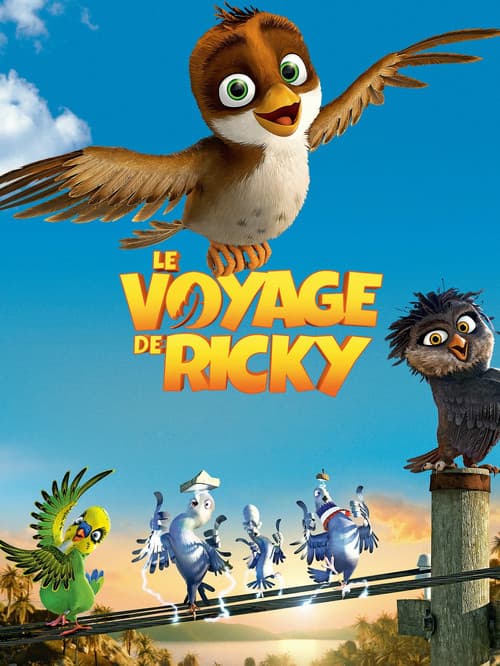
The narrative values self-acceptance, perseverance and courage in the face of adversity, with solid narrative coherence. Teamwork between characters with opposing profiles is presented as a genuine strength, not as a slogan. One sequence features pigeons dulled by their constant connection to the internet, a critique of social media direct enough to be perceived even by children. The message about tolerance and difference is central but never heavily didactic.
Social Themes
Migration lies at the heart of the narrative, treated as a coming-of-age journey but also as a biological and social reality that structures the characters' lives. The film does not politicise the subject, but the question of belonging, the right to be part of a group and exclusion based on origin is omnipresent. It is a natural angle for discussing with a child what it means to come from elsewhere and seek one's place.
Strengths
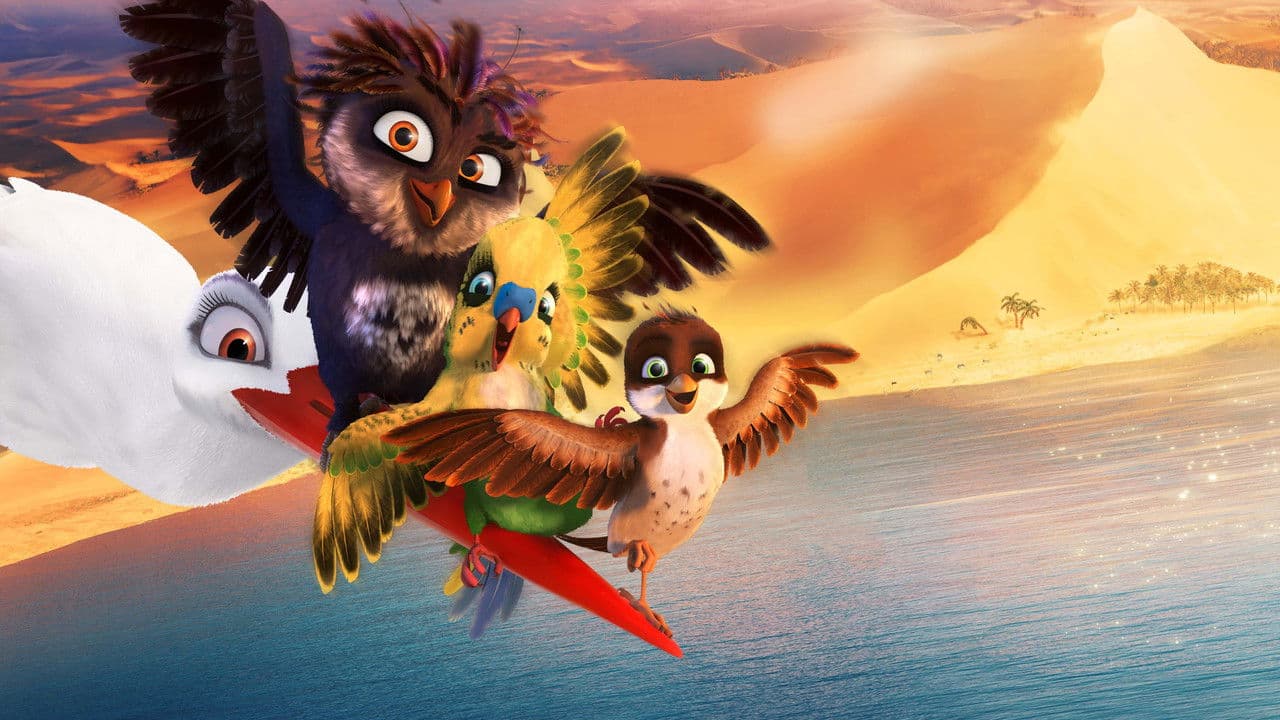
The film maintains its pace and offers a readable adventure, carried by a classical but effective narrative structure. The flying sequences are visually dynamic and the tension in certain danger scenes is well constructed for the intended age group. The emotional treatment of the sense of abandonment and the quest for identity is sincere and avoids easy sentimentality. The screenplay does not surprise adults, but it offers children a coherent narrative with characters whose flaws are acknowledged and evolving.
Age recommendation and discussion points
The film is suitable from 7 years old for peaceful viewing; younger children may be unsettled by the frightening scenes and themes of death and abandonment. Two discussion angles are worth exploring after viewing: why does Claudius despise sparrows, and does someone's species or origin say anything about their worth? And also: what does it mean to feel different within your own family, and how does Ricky find his place despite this?
Synopsis
Orphaned at birth and raised by storks, teenage sparrow Richard believes he is one of them. But when time comes to migrate to Africa, his stork family is forced to reveal his true identity and leave him behind in the forest, since he is not a migratory bird and would not survive the journey. Determined to prove he is a stork after all, Richard ventures south on his own. But only with the help of Olga, an eccentric owl with an imaginary friend and Kiki, a narcissistic, disco-singing parakeet, does he stand a chance to reach his goal and learn to accept who he really is.
About this title
- Format
- Feature film
- Year
- 2017
- Runtime
- 1h 30m
- Countries
- Belgium, Germany, Luxembourg, Norway
- Original language
- DE
- Directed by
- Toby Genkel
- Main cast
- Christian Gaul, Tilman Döbler, Nicolette Krebitz, Maud Ackermann, Schroeder Kacmar, Marco Eßer, Erica D. Schroeder, Marc Thompson, Marcus Off, Nico Birnbaum
- Studios
- Walking The Dog, Den Siste Skilling, Knudsen & Streuber Medienmanufaktur, Ulysses Filmproduktion, Melusine Productions
Content barometer
- Violence2/5Moderate
- Fear3/5Notable tension
- Sexuality0/5None
- Language0/5None
- Narrative complexity1/5Accessible
- Adult themes0/5None