

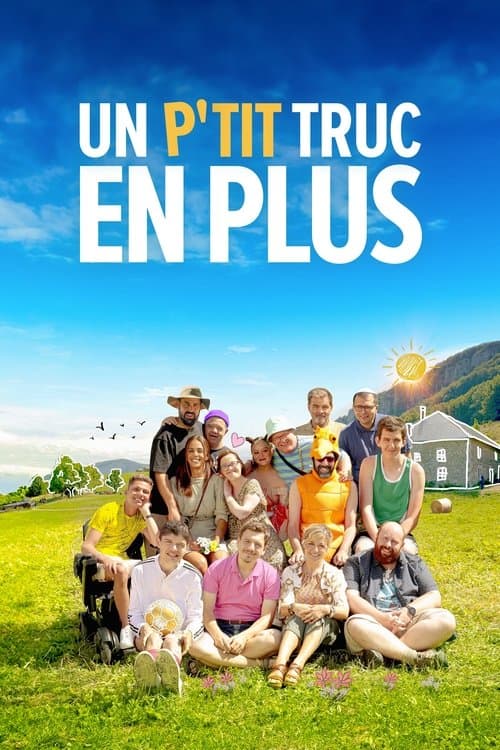
A Little Something Extra
Does this age rating seem accurate to you?
Detailed parental analysis
A Little Something Extra is a warm and luminous French comedy, infused with a benevolent atmosphere and generous humour. The story follows a conman who, to evade the police, is forced to pose as a specialist educator within a holiday group welcoming adults with intellectual disabilities. The film targets a broad family audience, primarily adults and teenagers, but is also suitable for children aged 10 and over when accompanied.
Underlying Values
This is where the film proves most interesting to discuss. The narrative constructs a genuine arc of transformation: a character initially opportunistic and cynical learns, through authentic contact with disabled people, to move beyond his reflexes of performance and manipulation. The structural message is one of acceptance of difference and the intrinsic value of every individual, regardless of their place in ordinary social hierarchy. It is not a plainly moralising message: it emerges from concrete situations and credible relationships. The dignity of the people represented is never sacrificed for a laugh, which distinguishes this film from a simple comedy of misunderstandings.
Language
The film contains coarse language and crude dialogue, consistent with the register of French popular comedy. These elements are not incidental and recur regularly throughout the dialogue. Nothing particularly aggressive or targeted, but it is a point to anticipate if the child is young or if raw language is unusual in the household.
Sex and Nudity
Sexual situations are present in the film, treated in a comedic manner and without graphic depiction. These are more suggestions and awkward situations than explicit scenes. For children around 10 years old, some of the jokes may prompt a brief explanation, which can also be an opportunity for a natural conversation.
Substances
Alcohol and tobacco are visible in the film, without being particularly valorised or presented as models. Their presence is part of a realistic and comedic framework without explicit glorification.
Discrimination
The film ventures onto the delicate terrain of representing intellectual disability. The choice to have several roles played by genuine people with intellectual disabilities is narratively and ethically significant: it grounds the story in authenticity and avoids caricature. The film does not treat its disabled characters as supporting figures or objects of pity, but as individuals with desires, humour and agency of their own. This is a rich angle for discussion to open with a child or teenager: how cinema usually represents disability, and what this film does differently.
Strengths
The film delivers on its narrative promise without ever lapsing into misery or condescension, which amounts to a genuine feat of writing balance. The humour works because it arises from situations and personalities, not at the expense of vulnerable people. The emotional progression of the main character is well constructed and credible, which gives the film coherence beyond mere entertainment. The popular success it has achieved says something about the public's appetite for narratives that take disability seriously without taking themselves too seriously.
Age recommendation and discussion points
The film is accessible from age 10 to 12 with adult accompaniment, and fully suitable from age 12 onwards without major reservations. Two angles merit conversation after the film: ask the child what changed in the main character's perspective over the course of the story, and why; and reflect together on the way disability is discussed, or the way it is avoided, in everyday life.
Synopsis
To escape the police, a father and his son are forced to find refuge in a summer camp for young adults with mental disabilities, taking on the role of an educator and a boarder. The beginning of troubles and a wonderful human experience that will change them forever.
About this title
- Format
- Feature film
- Year
- 2024
- Runtime
- 1h 39m
- Countries
- France
- Original language
- FR
- Directed by
- Artus
- Main cast
- Artus, Clovis Cornillac, Alice Belaïdi, Marc Riso, Céline Groussard, Gad Abecassis, Ludovic Boul, Stanislas Carmont, Marie Colin, Thibaut Conan
- Studios
- Cine Nomine, Auvergne-Rhône-Alpes Cinéma, M6 Films, Same Player, Echo Studio
Content barometer
- Violence1/5Mild
- Fear0/5None
- Sexuality2/5Mild
- Language3/5Notable
- Narrative complexity1/5Accessible
- Adult themes2/5Present
Watch-outs
- Alcohol
- Strong language
- Gender stereotypes
Values conveyed
- Friendship
- Acceptance of difference
- Compassion
- empathy
- father-son bond
- inclusion
- personal growth
- kindness
- redemption