A Letter to Momo
ももへの手紙
Does this age rating seem accurate to you?
Detailed parental analysis
Letter to Momo is a Japanese animated film with a contemplative and melancholic atmosphere, punctuated by moments of slapstick comedy. A young girl grieving her father moves with her mother to an isolated island and finds herself confronted by supernatural creatures who accompany her, in their own way, on her path towards acceptance. The film is aimed primarily at children from 8 years old and their parents, with an emotional depth that resonates just as strongly with adults.
Parental and Family Portrayals
The film constructs its narrative around forgiveness, particularly forgiving oneself for words that cannot be taken back. It values mutual support within the family in the face of hardship, without ever resorting to injunctions to overcome or performative resilience. Momo's guilt is taken seriously, and its resolution comes through a powerful symbolic act rather than a stated lesson. This is writing that trusts in the emotional intelligence of the viewer, including young ones.
Underlying Values
The film constructs its narrative around forgiveness, particularly forgiving oneself for words that cannot be taken back. It values mutual support within the family in the face of hardship, without ever resorting to injunctions to overcome or performative resilience. Momo's guilt is taken seriously, and its resolution comes through a powerful symbolic act rather than a stated lesson. This is writing that trusts in the emotional intelligence of the viewer, including young ones.
Violence
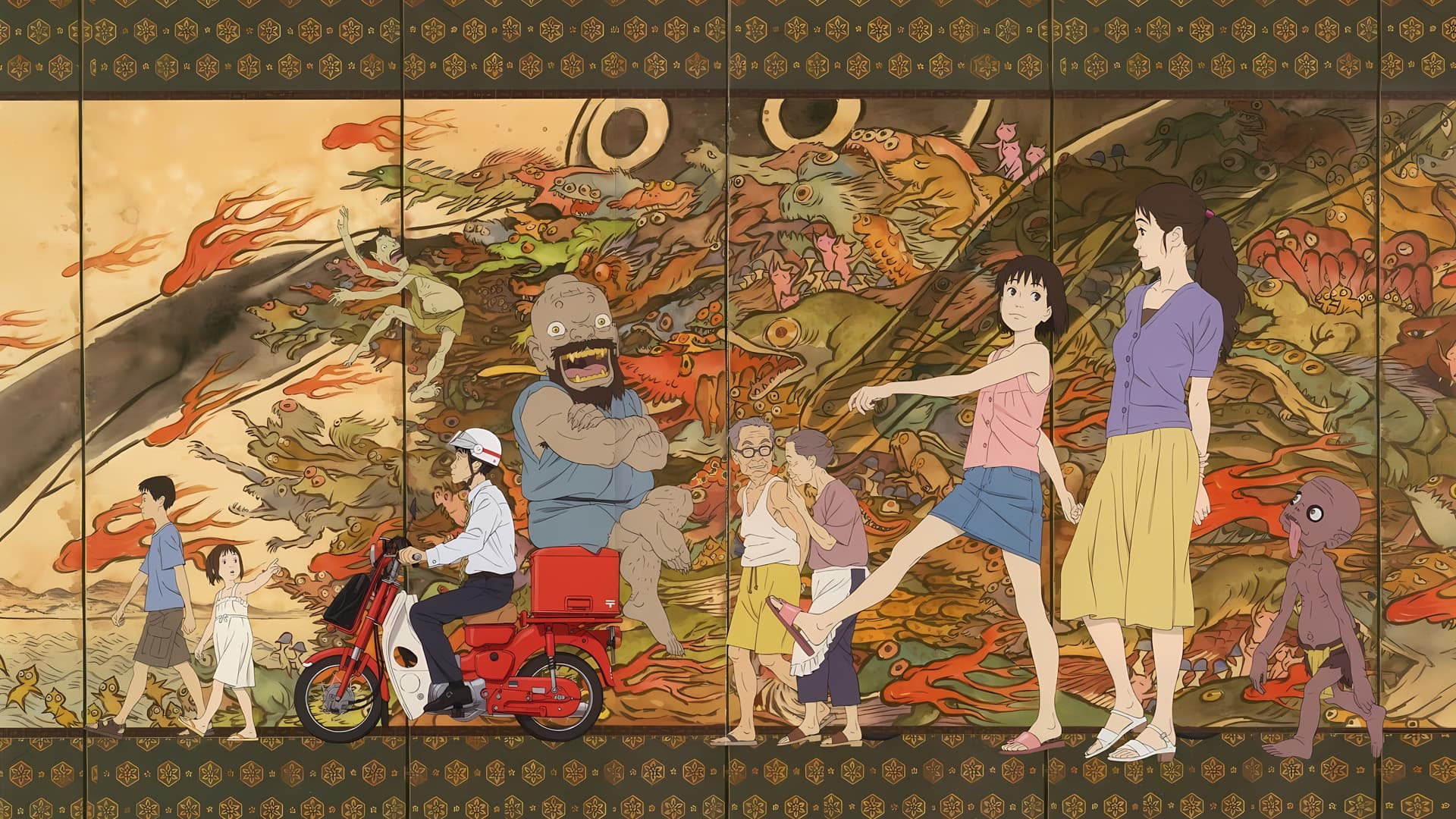
The supernatural creatures have a monstrous appearance and can be frightening for the youngest children: one is massive with a gaping mouth and protruding teeth, another is small but grotesque. Their appearances are often played for comic effect, which partly defuses the fear, but certain action sequences are frankly intense, notably a chase by a wild boar and a dramatic storm sequence on an unfinished bridge. The mother suffers a severe asthma attack during this storm, which constitutes the film's peak of tension. None of these scenes is gratuitous: they all serve the narrative and emotional progression.
Social Themes
The film grounds its narrative in rural island Japan, with sensitive attention to rituals, local beliefs and the relationship between the world of the living and that of spirits. This spiritual dimension, inherited from Japanese folklore tradition, is not presented as a cultural lesson but experienced from within by the characters. For a Western child, it is a natural opening towards another way of conceiving death, grief and the presence of the departed.
Strengths
The film distinguishes itself through the subtlety with which it treats childhood grief without ever reducing it to a life lesson. Momo's guilt, her anger, her clumsy tenderness are rendered with a psychological precision that rings true. The alternation between comic sequences carried by the creatures and moments of intense emotion is well balanced and avoids the pitfall of a uniformly heavy film. The artistic direction is careful, with Japanese island landscapes that establish a gentle atmosphere slightly outside of time. The two-hour duration is fully justified by a pace that allows emotions to breathe rather than rushing them.
Age recommendation and discussion points
The film is suitable from 8 years old, with parental accompaniment recommended for sensitive children or those who have experienced recent bereavement. Two angles of discussion naturally emerge after viewing: asking the child what they think of Momo's guilt and whether one can truly reconcile with someone one can no longer see, and exploring together what the creatures represent in the film and why they help Momo despite their frightening appearance.
Synopsis
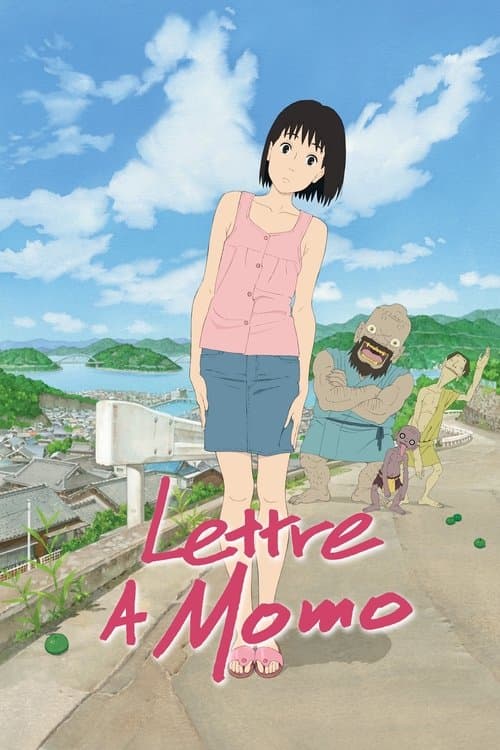
A shy 11-year-old's life takes a strange turn when she discovers three hungry goblins living in the attic of her new house. She misses her old life. She misses her father so very much. Until she makes some new ghoulish friends.
About this title
- Format
- Feature film
- Year
- 2012
- Runtime
- 2h
- Countries
- Japan
- Original language
- JA
- Directed by
- Hiroyuki Okiura
- Main cast
- Karen Miyama, Yûka, Toshiyuki Nishida, Koichi Yamadera, Cho, Yoshisada Sakaguchi, Ikuko Tani, Takeo Ogawa, Daizaburō Arakawa, Kota Fuji
- Studios
- TBS, KADOKAWA, Production I.G, KADOKAWA Shoten, Bandai Visual, CBC, Chugoku Broadcasting, Horipro, MBS, OLM, Tokyu Recreation, Yahoo! Japan, jeki
Content barometer
- Violence2/5Moderate
- Fear3/5Notable tension
- Sexuality0/5None
- Language0/5None
- Narrative complexity3/5Complex
- Adult themes0/5None
Values conveyed
- Compassion
- Forgiveness
- grief and acceptance
- guilt and forgiveness
- friendship
- courage
- family bonds
- resilience
- belonging