
A Cat in Paris
Does this age rating seem accurate to you?
Detailed parental analysis
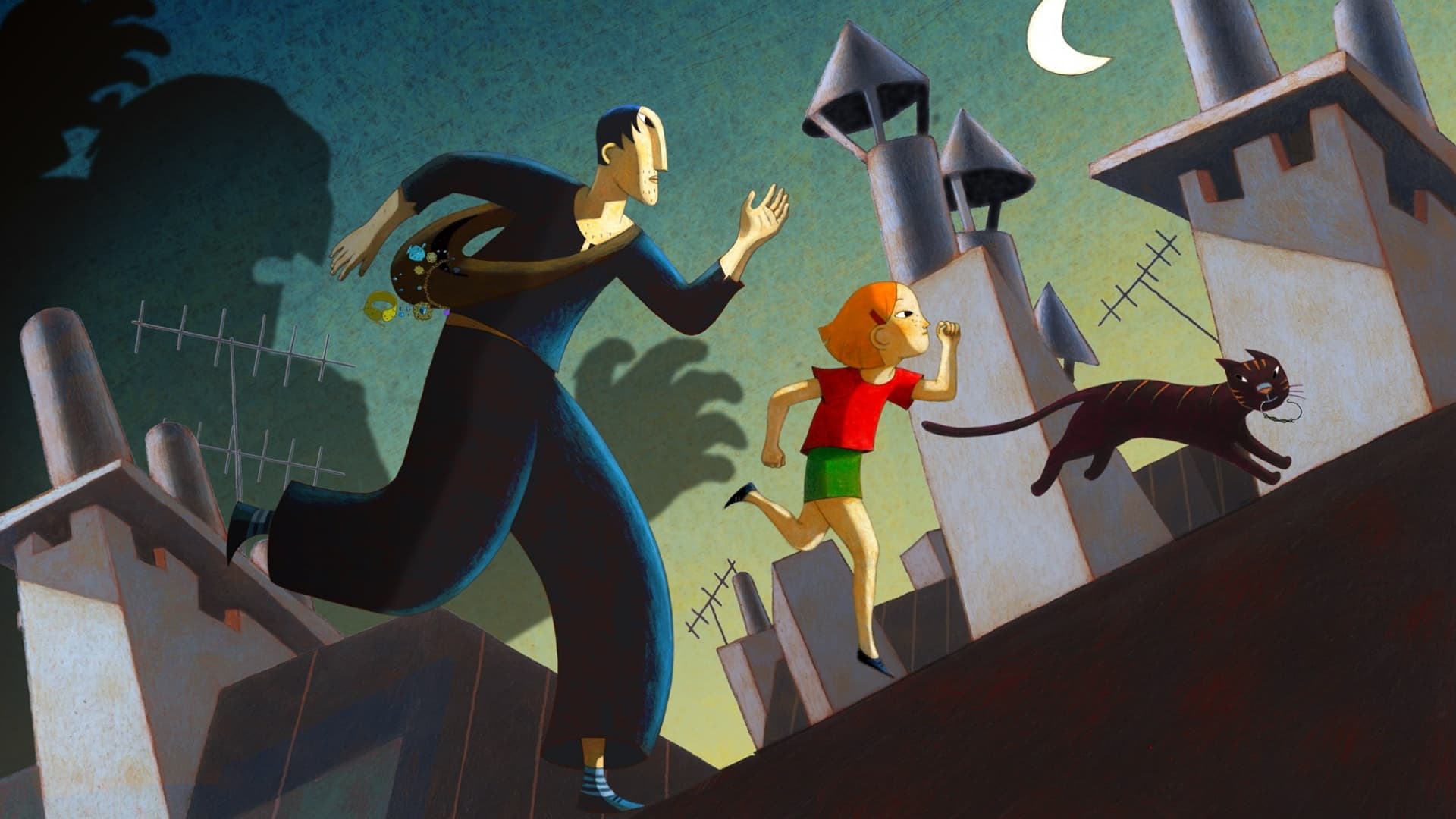
A Cat in Paris is an animated film with stylised graphics and a resolutely dark atmosphere, which stands in sharp contrast to the usual aesthetic of children's cartoons. The plot follows Zoé, a mute young girl since her father's death, whose cat leads a double nocturnal life alongside a burglar, whilst Zoé's mother, a police officer, hunts a dangerous gangster. The film presents itself as a children's tale but its tone, violence and darkness make it more suited to a pre-adolescent audience accompanied by adults.
Violence
Violence is the film's principal point of tension and far exceeds what the graphic style might lead one to expect. A gangster kidnapping a young girl, an anxious nocturnal chase through a zoo, explicit threats directed at the child, hand-to-hand combat with punches and a tooth knocked out, and a death by falling form the heart of the narrative. This violence is not gratuitous in the strict sense: it serves a constructed police plot and leads to narrative resolution. But it is sustained, real and little softened by the visual style, which creates a disturbing disconnect for young viewers who might expect a light-hearted film. The gangster Costa is a credibly threatening antagonist, whose threats towards Zoé are formulated with a coldness that can leave a lasting mark on a sensitive child.
Underlying Values
The film adopts a morally ambiguous stance that deserves discussion. The thief Nico, a central character and figure of protection, is never punished for his criminal activities and achieves a happy ending, including on the romantic front. This deliberate narrative choice is not an oversight: it constructs a morality of the 'good bad guy' where sympathy for the character erases the question of his actions. Moreover, the film intelligently nuances manichaeism by showing that appearances are deceptive, that wickedness has degrees, and that misplaced trust has real consequences. These tensions are worth naming with a child after viewing.
Parental and Family Portrayals
The maternal figure is central but profoundly deficient on a narrative level: a police officer absorbed by her quest for vengeance, she leaves her daughter in the care of a nanny who turns out to be the accomplice of her husband's murderer. This negligence is not presented as a flaw to be corrected but as a dramatic device, without any real awareness on the mother's part of her own failings. The father, absent because he has been murdered, is the source of the grief that structures the entire film. Zoé's emotional reconstruction, a mute child, constitutes the most touching and most truthful arc of the narrative.
Social Themes
Grief and its effects on a child run through the entire film with genuine sincerity. Zoé's muteness, her emotional dissociation, and the way she gradually reconnects with the world constitute an honest and unvarnished treatment of childhood trauma. This is probably the most valuable dimension of the film for a parent-child conversation, provided the adult is prepared to accompany it.
Strengths
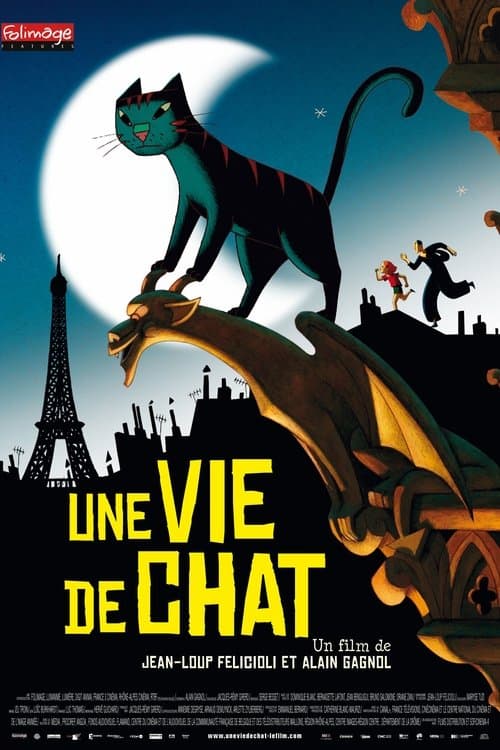
The film possesses a strong and coherent visual identity, with angular graphics and a nocturnal colour palette that establish an immediately recognisable atmosphere. The narrative writing is more ambitious than the average animated production aimed at this audience: the characters have real depth, false appearances are carefully constructed, and the treatment of childhood grief avoids the usual conveniences of the genre. Dramatic tension is maintained effectively throughout the narrative. For a child old enough to receive it, the film offers a dense emotional experience and an introduction to the moral complexity of characters.
Age recommendation and discussion points
The film is not recommended for children under 8 without adult accompaniment, and can be watched with ease from age 10 onwards. Two angles of discussion emerge after viewing: why is Nico not punished when he steals, and does that really make him 'good'? And how did Zoé manage to break her silence, and what helps one through great sorrow?
Synopsis
A thrilling mystery that unfurls in the alleys and on the rooftops of the French capital, Paris, over the course of one adventurous evening.
Where to watch
Availability checked on Apr 29, 2026
About this title
- Format
- Feature film
- Year
- 2010
- Runtime
- 1h 10m
- Countries
- France, Netherlands, Switzerland, Belgium
- Original language
- FR
- Directed by
- Jean-Loup Felicioli, Alain Gagnol
- Main cast
- Dominique Blanc, Bruno Salomone, Jean Benguigui, Bernadette Lafont, Oriane Zani, Patrick Ridremont, Jacques Ramade, Jean-Pierre Yvars, Bernard Bouillon, Philippe Hartmann
- Studios
- Folimage, Digit Anima, France 3 Cinéma, Gébéka Films
Content barometer
- Violence3/5Notable
- Fear4/5Intense
- Sexuality0/5None
- Language1/5Mild
- Narrative complexity0/5Simple
- Adult themes0/5None
Values conveyed
- Courage
- Acceptance of difference
- Loyalty
- family
- redemption